
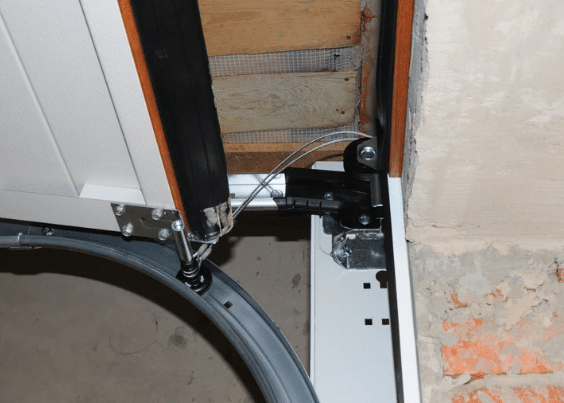
Garage door cables are easy to forget about. They run quietly along the sides of your door, doing their job through thousands of open and closed cycles, until one day they do not. By then, the cable has either snapped under tension, slipped off the drum, or worn down to the point where the door is no longer safe to operate. Knowing when to schedule broken garage door cable replacement is one of the most practical steps a homeowner can take to avoid an unexpected and potentially dangerous failure.
The question most homeowners face is not whether to replace their cables but when. Replacing them too early feels wasteful. Waiting too long risks a sudden failure that can damage the door panels, strain the opener motor, or injure someone nearby when the door drops without warning. This guide gives you a clear framework for making that call, covering lifespan, accelerating factors, replacement conditions, and what the process looks like.
How Long Do Garage Door Cables Typically Last
Understanding the average lifespan of a garage door cable gives you a starting point for knowing when to start paying closer attention.
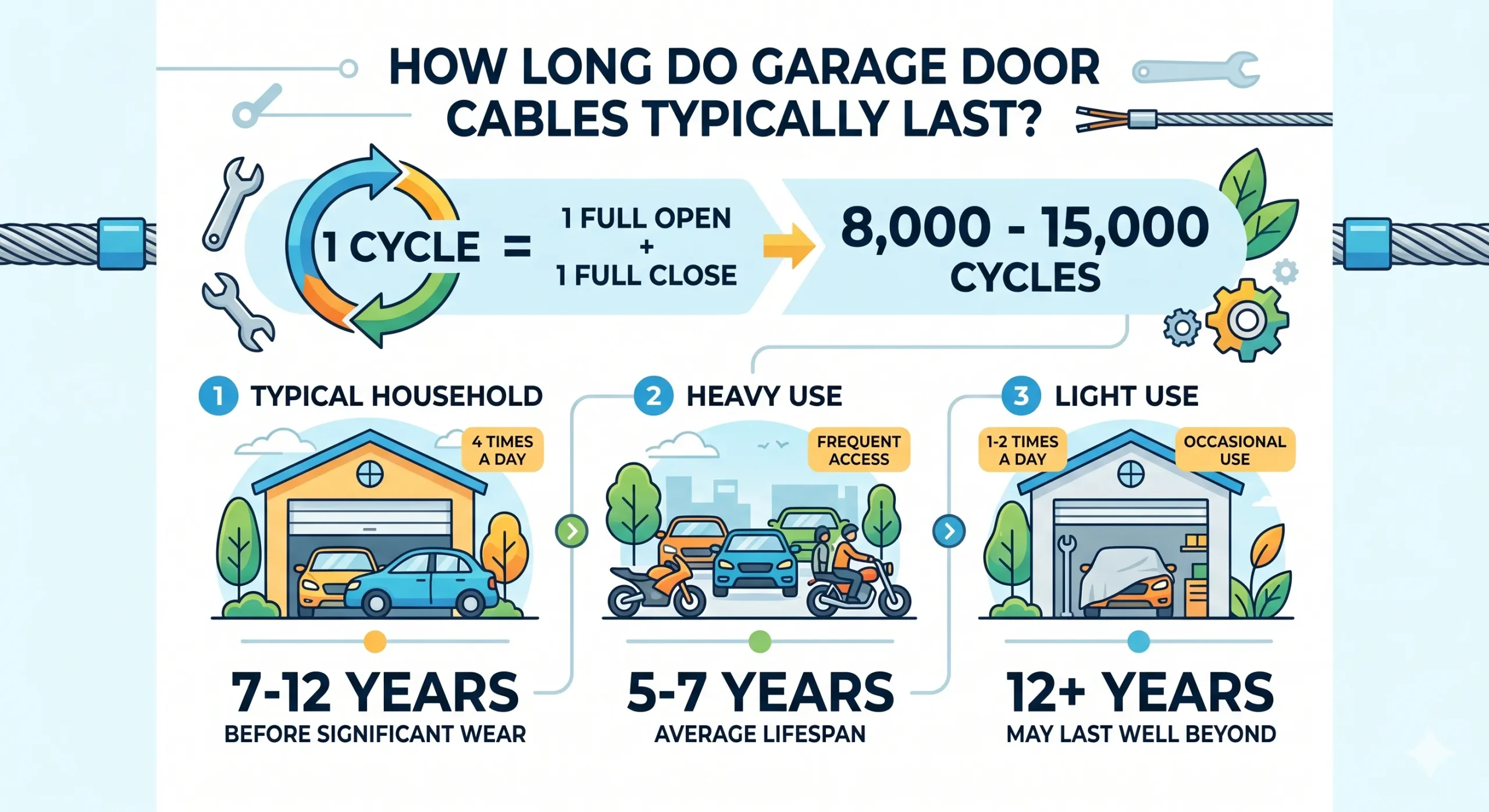
Most garage door cables are rated for a lifespan that aligns with the door’s usage cycle rather than a fixed number of years. Here is what that generally looks like in practice:
- Average lifespan by cycle count. Cables on a standard residential door typically last between 8,000 and 15,000 cycles. One cycle equals one full open and one full close.
- Average lifespan in years. For a household that opens the garage door four times a day, that works out to roughly seven to twelve years before cables show significant wear.
- Heavy-use households. Families with multiple drivers or home-based businesses that access the garage frequently may see cable wear closer to the five to seven-year range.
- Light-use households. A garage used once or twice a day, or a secondary garage used only occasionally, may see cables last well beyond twelve years.
These ranges are estimates, not guarantees. Factors like humidity, lubrication habits, and the quality of parts originally installed all affect how quickly a cable wears down.
If your cable has already slipped off once and you are wondering whether a repair or a full replacement makes more sense, Garage Door Cable Came Off One Side? Causes and Solutions breaks down both options clearly.
Factors That Shorten Cable Lifespan
Several conditions accelerate cable wear and push replacement timelines earlier than the averages above suggest.
- High usage frequency. Every additional cycle puts mechanical stress on the cable strands, drum grooves, and anchor points. A door used six or more times per day wears components significantly faster than one used twice.
- Moisture and humidity. Garages that are not climate-controlled or have poor door sealing allow moisture to settle on the cables. Rust weakens the steel strands and makes them brittle over time, often from the inside out where it is difficult to see.
- Infrequent lubrication. Cables and drums that run dry create friction with every cycle. That friction accelerates groove wear in the drum and increases strand stress along the cable, shortening its useful life considerably.
- Spring tension imbalance. When the torsion or extension springs are out of adjustment, the cables carry uneven loads. One cable takes on more stress than it was designed for, causing it to wear faster than the other.
- Low-quality replacement parts. If cheaper cables or drums were installed during a previous repair, they may not hold up as well under standard residential use and will require replacement sooner.
- Extreme temperature swings. In areas like Southlake, TX where summer heat can be intense, metal components expand and contract with temperature changes. Over many years, this repeated thermal cycling contributes to metal fatigue in both cables and springs.
Signs When You Should Replace Your Garage Door Cable
There is a point where reattaching or patching a cable no longer makes sense. Here are the conditions that indicate full replacement is the right call.
The Cable Has Come Off More Than Once
- A cable that slips off repeatedly signals an underlying system problem that reattachment alone cannot solve
- The cause may be a worn drum, a weakening spring, or a misaligned track
- Kinking, stretching, and micro-fractures accumulate in the cable with every failure
- Continued reattachment becomes more expensive and less reliable than full replacement
Visible Fraying With Multiple Broken Strands
- One or two broken strands may allow a short window to schedule replacement
- Multiple broken strands or a visibly separating steel bundle require immediate action
- Remaining strands carry the full door load and can fail quickly without further warning
The Cable Is Corroded or Heavily Rusted
- Light surface rust can sometimes be addressed with cleaning and lubrication
- Heavy rust causing visible pitting, discoloration, or floor residue means replacement is the only reliable solution
- Corroded steel loses tensile strength and may lack the structural capacity to handle the door’s weight safely
The Cable Is at or Past Its Expected Lifespan
- Cables in the seven to twelve year range should be considered for replacement even if they look acceptable on the surface
- Internal strand fatigue is not always visible from the outside
- Proactive replacement avoids an unplanned failure at an inconvenient or dangerous moment
After a Spring Replacement
- Springs and cables wear in parallel through every cycle
- If the spring has reached the end of its life, the cables are often close behind
- Replacing both during the same visit avoids a second service call within a short period
For a full list of the visual and performance warning signs that indicate a cable is close to failure, Signs Your Garage Door Cable Is About to Fail covers each one in detail.
Repair vs. Replacement: How to Know Which One Makes Sense
Not every cable issue requires full replacement. Here is a straightforward way to think about the decision.
Repair may be appropriate when:
- The cable came off for the first time and shows no visible fraying, kinking, or rust.
- The cable is relatively new and within the first half of its expected lifespan.
- The cause of the failure was a one-time event such as a spring breaking, which has already been addressed.
- The cable is otherwise structurally sound and only needs to be properly reattached and tensioned.
Replacement is the better choice when:
- The cable has come off more than once, even after being properly reattached.
- There is visible fraying, multiple broken strands, kinking, or corrosion anywhere along the cable.
- The cable is in the seven to twelve year age range or older.
- The spring was just replaced and both components are at a similar point in their wear cycle.
- A technician finds internal damage or stretch beyond the cable’s working tolerance during inspection.
When in doubt, a professional garage door repair inspection gives you the information needed to make a confident decision rather than guessing. A good technician will give you an honest assessment rather than automatically recommending replacement when repair is still a reasonable option.
Should You Replace One Cable or Both at the Same Time
This is one of the most common questions homeowners ask when faced with a cable replacement. The short answer is that replacing both cables at the same time is almost always the better approach.
Here is why:
- Cables wear in parallel. Both cables go through every cycle together. If one has reached the end of its life, the other is typically at a very similar stage of wear.
- Mismatched cable age creates tension imbalance. A new cable on one side and an aging cable on the other will not carry equal loads. The older cable stretches and slackens more easily, putting the door off balance.
- It avoids a second repair call shortly after the first. Replacing just one cable often means the other fails within weeks or months. Replacing both during the same visit saves time, cost, and inconvenience.
- Labor costs are mostly shared. The additional cost of the second cable is primarily the material. The labor involved in replacing both is not significantly more than replacing one because the technician is already set up to do the work.
Most experienced garage door technicians will recommend dual replacement when one cable has failed, and the system is in the seven-plus year range.
For more on the recurring failure patterns that make dual replacement especially important, Why Does My Garage Door Cable Keep Coming Off? explains what happens when the root cause is not fully addressed.
What to Expect During a Professional Cable Replacement
Knowing what the replacement process involves helps you plan for the visit and understand what you are paying for.
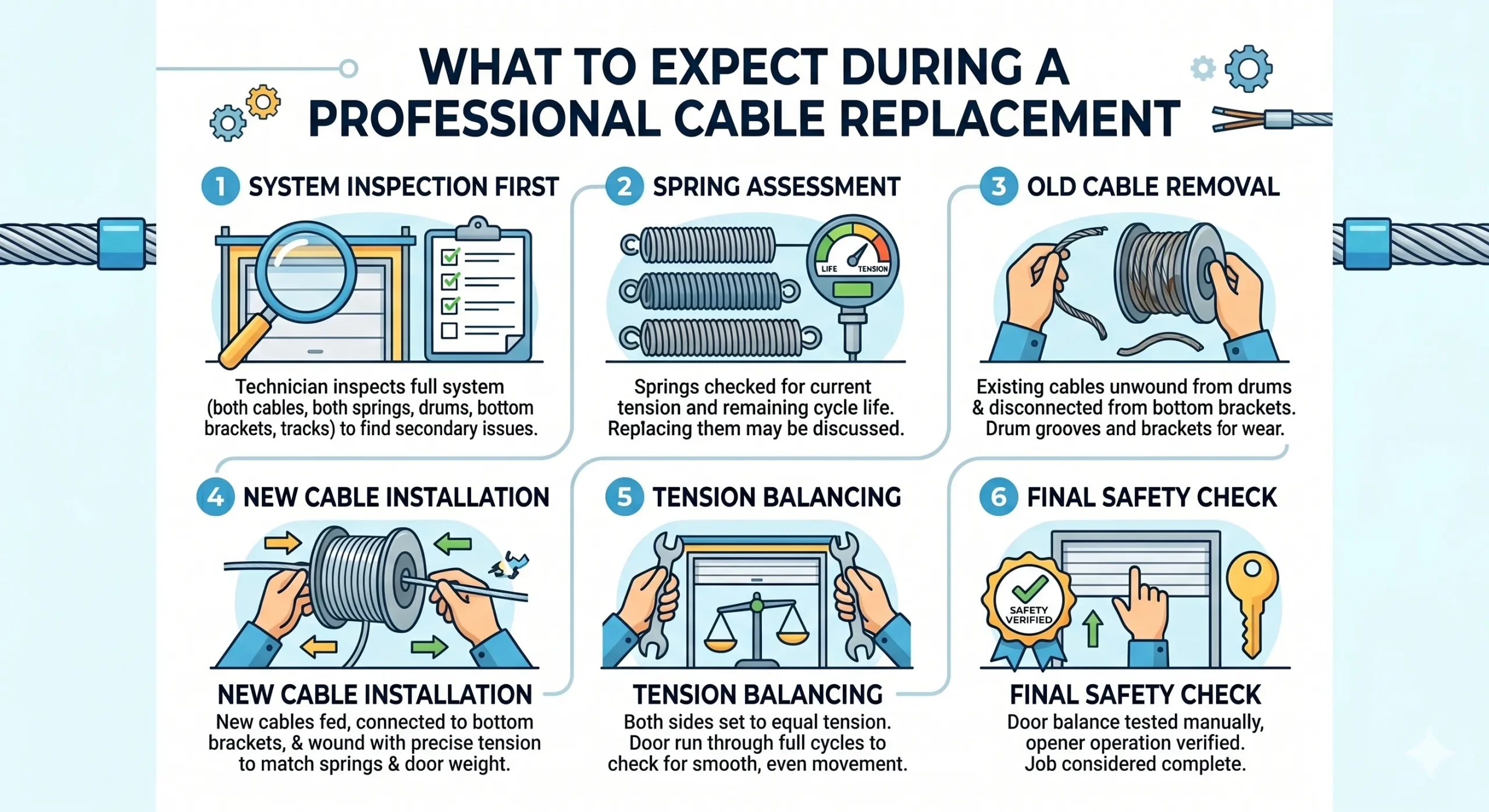
- System inspection first. A thorough technician will inspect the full system before starting, including both cables, both springs, the drums, the bottom brackets, and the tracks. This identifies any secondary issues that should be addressed in the same visit.
- Spring assessment. The springs will be checked for current tension and remaining cycle life. If they are close to the end of their lifespan, the technician will discuss replacing them alongside the cables.
- Old cable removal. The existing cables are unwound from the drums and disconnected from the bottom brackets. The technician will check the drum grooves and bracket hardware for wear at this stage.
- New cable installation. New cables are fed through the system, connected to the bottom brackets, and wound onto the drums with precise tension to match the spring setup and door weight.
- Tension balancing. Both sides are set to equal tension. The technician will test this by running the door through several full cycles and checking for smooth, even movement.
- Final safety check. The door balance is tested manually, and the opener operation is verified before the job is considered complete.
Most residential cable replacements are completed in one to two hours. Costs vary depending on the parts involved and whether any additional repairs are needed during the same visit. Asking for a written estimate before work begins is always a reasonable step.
The IDA’s care and maintenance page outlines the professional service standards homeowners should expect during a full garage door system inspection and repair visit.
The Right Time to Replace Is Before the Cable Decides for You
Most cable failures are preventable. Knowing the lifespan of your cables, recognizing the early signs of wear, and staying consistent with annual maintenance puts you in control of the timeline. Replacement on your schedule, with the right parts and proper tension balancing, is a straightforward process. Replacement in response to a sudden failure, with a door that has dropped, panels that have cracked, or an opener motor that has been pushed past its limit, is a far more costly and stressful situation to be in. The difference between the two often comes down to how seriously those early warning signs were taken.
For homeowners in Southlake, TX, First Responder Garage Doors delivers thorough inspections, accurate assessments, and quality repairs without recommending work that is not needed. If you are unsure whether your cables are due for a closer look or a full replacement, contact us or give us a call to schedule a visit and get a clear, honest picture of where your garage door system actually stands.