
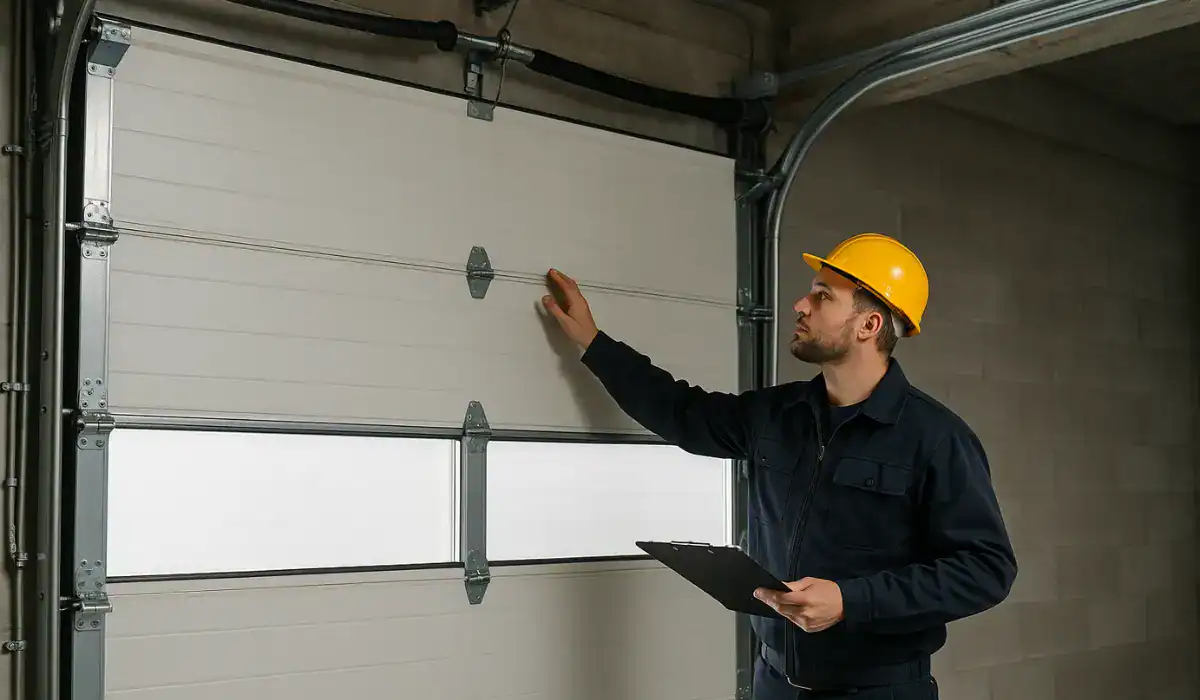
Your garage door goes up and down multiple times every single day. Most homeowners never think about it until something stops working. When it does, the problem almost always traces back to one specific part that has worn out, broken, or failed from years of regular use.
Understanding which components are most likely to fail gives you a real advantage. You will know what to look for, what sounds and signs mean trouble is coming, and when to stop and call a technician before a small issue turns into a garage door repair job that costs far more than it should have.
This guide breaks down the most common garage door parts that fail, what causes them to break, and what every homeowner in Southlake, TX, should know about keeping their system running before it needs garage door repair.

Torsion Springs
If there is one part that fails more than any other, it is the torsion spring. This is the large, coiled spring mounted horizontally above your garage door. Its job is to counterbalance the full weight of the door so the opener does not have to do all the lifting on its own.
Torsion springs are rated for a set number of cycles. One cycle equals one open and one close. Most standard springs are rated for around 10,000 cycles, which works out to roughly 7 to 12 years of average use. When that cycle count runs out, the spring loses tension and eventually snaps.
Signs your torsion spring is failing:
- A loud bang coming from inside the garage, often described as a gunshot sound
- The door feels extremely heavy when lifted manually
- One side of the door hangs lower than the other
- A visible gap in the spring coil above the door
Torsion spring replacement is not a do-it-yourself repair. The spring is under extreme tension and can cause serious injury if handled incorrectly. Always contact a trained technician for this repair.
If you are still trying to figure out what triggered the problem in the first place, our overview of Garage Door Won’t Open or Respond? Here’s What’s Going Wrong is a good place to start.
Extension Springs
Some garage doors use extension springs instead of torsion springs. These are the long, stretched springs that run along the horizontal tracks on each side of the door. They work by extending and contracting as the door moves up and down.
Extension springs wear out for the same reasons torsion springs do, but they also have a tendency to snap and fly off the track when they break, which makes them a safety hazard.
Watch for these warning signs:
- Uneven door movement, with one side rising faster than the other
- Visible stretching, gaps, or deformity in the spring coil
- Squeaking or popping sounds during operation
- The door is struggling to stay open on its own
Extension springs should always have safety cables running through the center of the coil. These cables catch the spring if it breaks and prevent it from becoming a projectile.
Garage Door Cables
Cables work alongside the springs to lift and lower the door safely. They are made of braided steel wire and are attached to the bottom corners of the door, running up and around drums at the top of the track.
When a cable wears out or snaps, the door can drop suddenly on one side, become stuck, or fall completely. This is a high-risk failure because of how much tension the cables carry at all times.
Signs of cable wear include:
- Fraying or visible wire strands separating from the main cable
- The door sitting crooked or lower on one side
- A snapping or popping sound followed by the door refusing to move
- Slack or looseness in the cable when the door is closed
Cable repairs involve the same tension risks as spring repairs. Do not attempt to reattach or replace cables on your own.
Rollers
Rollers are the small wheels that sit inside the door tracks and allow the door to move smoothly up and down. Most garage doors have between 10 and 12 rollers, and they take a significant amount of wear over time.
Standard steel rollers last around 10,000 cycles. Nylon rollers tend to last longer and operate more quietly. When rollers begin to wear out, the door becomes louder, less smooth, and harder on every other moving part in the system.
What worn rollers look like:
- Loud grinding, rattling, or squeaking during operation
- Visible cracks, chips, or flat spots on the roller wheel
- The door vibrating more than usual during movement
- Rollers that have jumped out of the track entirely
Rollers are one of the more affordable parts to replace. Catching worn rollers early helps protect the tracks, springs, and opener motor from added stress.
Hinges
Hinges connect the individual panels of your garage door and allow it to bend as it moves along the curved section of the track. Most garage doors have multiple hinges running down the seams between each panel.
Hinges are stamped from steel and will eventually crack, bend, or wear through the hole where the roller shaft sits. When a hinge fails, the door panel it supports can shift, buckle, or separate from the rest of the door.
Signs of hinge problems:
- Visible cracks or bending on the hinge plate
- The roller shaft sitting loosely or wobbling in the hinge hole
- A panel that looks slightly separated or misaligned from its neighbor
- Grinding sounds that seem to come from a specific point on the door
Damaged hinges should be replaced promptly. A failed hinge can cause a roller to jump the track, which puts sudden stress on cables and springs.
The Garage Door Opener Motor
The opener motor is the brain of the system. It receives signals from your remote or wall button and powers the drive mechanism that moves the door. Opener motors are built to last, but they do not last forever.
Most openers have a lifespan of 10 to 15 years with regular use. In Southlake, TX, temperature extremes can put added stress on the motor housing and internal components over time. When a motor fails without warning, it can quickly become one of the more disruptive garage door emergencies a homeowner faces, especially if the door is stuck closed with a vehicle trapped inside.
Common opener motor failures include:
- The motor is running, but the door is not moving (stripped drive gear)
- The motor is making a humming sound but not activating
- Intermittent response to remote or wall button signals
- The door reverses immediately after starting to move
Understanding what happens when a garage door spring breaks can also help you identify whether the motor is truly failing or just struggling because of a separate mechanical problem. Angi’s guide on what happens when a garage door spring breaks explains the connection clearly.
Photo-Eye Sensors
Photo-eye sensors are the small safety devices mounted a few inches off the ground on each side of the door track. They send a beam across the opening. If anything interrupts that beam, the door stops or reverses as a safety measure.
Sensors are relatively simple but can fail in several ways:
- Physical damage from being bumped or hit
- Lens contamination from dirt, grease, or moisture
- Wiring that has become frayed or disconnected over time
- Component failure inside the sensor unit itself
A malfunctioning sensor will usually show a blinking light instead of a steady one. The International Door Association provides useful professional garage door care and maintenance guidance that includes how sensors should be checked during routine inspections.
Sensor problems are worth addressing quickly. A door that ignores its own safety sensors is a hazard to people, vehicles, and pets.

Weather Stripping and Bottom Seal
The weather stripping runs along the sides and top of the door frame while the bottom seal sits beneath the door and presses against the floor. Together, they keep out rain, wind, dust, and pests.
In Southlake, TX, the weather seal takes constant punishment from humidity, heat, and seasonal temperature swings. Over time, it dries out, cracks, and pulls away from the frame.
Signs the seal needs attention:
- Visible light coming through the sides or the bottom of the closed door
- Drafts or moisture entering the garage
- Insects or debris are getting in despite the door being closed
- The rubber is pulling away or crumbling at the edges
Replacing weather stripping and bottom seals is one of the more manageable maintenance tasks. It also improves energy efficiency in the garage and protects stored belongings from the elements.
How Common Garage Door Components Work Together
No garage door part works in isolation. Springs support the cables. Cables support the door’s weight. Rollers carry the door along tracks. Hinges keep the panels connected. The opener ties it all together. When one part starts to wear, it adds stress to everything connected to it.
This is why catching a failing component early matters. A worn roller, ignored long enough, becomes a bent track. A fraying cable left alone becomes a collapsed door. Early awareness and regular checks make a real difference in how long your system lasts.
To learn how to keep all of these parts in good condition season after season, read How to Keep Your Garage Door Working All Year Long.
Some Parts Are Safe to Inspect, Others Are Not
There is a clear line between what a homeowner can safely look at and what requires a trained technician. Wiping a sensor lens, checking hinge screws, or replacing weather stripping are reasonable tasks for most people. Anything involving springs, cables, or the opener’s internal drive system should be handled professionally.
If you are unsure whether what you are seeing is a sign of a part that needs replacement, the safest step is always to stop using the door and have it inspected. Our guide When to Call a Technician for Your Garage Door outlines exactly when professional service is the right call.
Know Your Door Before It Fails You
A garage door with worn or failing components does not always stop working all at once. It gives you warning signs first, sounds, slowness, shaking, misalignment, and uneven movement. Recognizing those signs early is the difference between a routine repair and an emergency.
If your garage door has been showing any of the signs covered in this guide, do not wait for a full breakdown before taking action.
First Responder Garage Doors serves homeowners throughout the Southlake, TX area with fast, professional garage door repairs. Whether it is a worn spring, a failing opener, or a sensor that is acting up, our team has the tools and experience to get your door working safely again. Contact us or give us a call to book your inspection.