
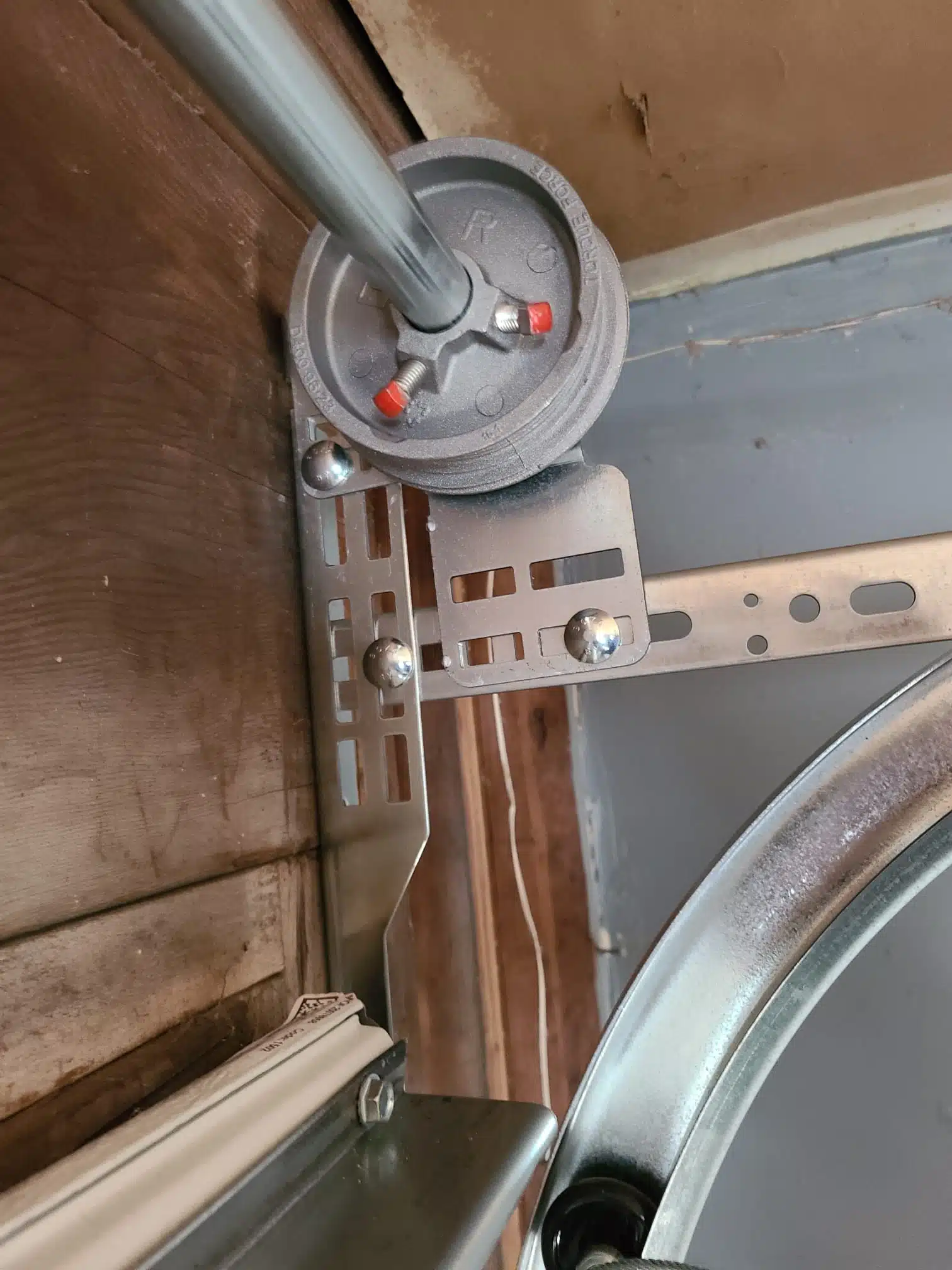
Most garage door cable failures do not happen without warning. The cable does not just snap out of nowhere. In most cases, it gives you signals days or even weeks before the problem becomes serious, through visible fraying, unusual sounds during operation, uneven door movement, or slack that was not there before. These are not minor quirks to dismiss. They are the system communicating that something is wrong and that the window to act before a full failure is still open. Recognizing these signs early is what keeps a manageable repair from becoming an urgent broken garage door cable replacement.
The challenge is knowing what to look for. Cables run along the sides of the door and rarely draw attention during normal use, which makes it easy to overlook early warning signs until the door suddenly stops working or, worse, drops without warning. A quick visual check every now and then costs nothing and can save you from a costly emergency repair. This guide walks through the specific signs your garage door cable is starting to fail, what each one means, and when it is time to stop using the door and call a professional.
What Your Garage Door Cable Should Look Like When Healthy
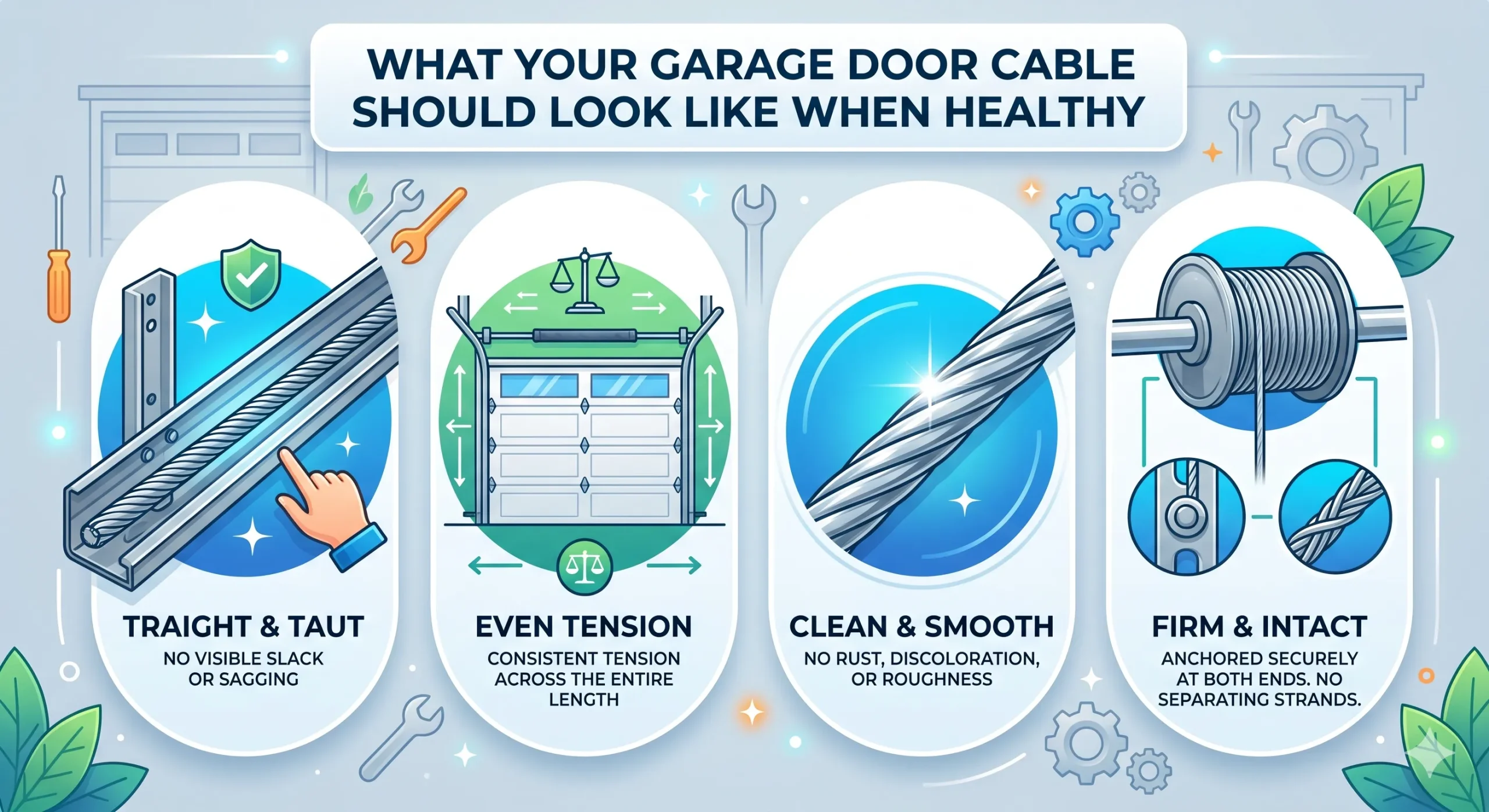
Before identifying problems, it helps to know what a cable in good condition looks like. This gives you a clear baseline for comparison.
A healthy garage door cable should look like this:
- Straight and taut on both sides. When the door is fully closed, both cables should run tightly along the vertical track with no visible slack or sagging.
- Even tension across the full length. The cable should not appear tighter in some sections and looser in others.
- Clean and smooth. No rust, discoloration, or roughness along the cable surface.
- Firmly anchored at both ends. The cable should connect cleanly to the bottom bracket at the base and wrap evenly around the drum at the top without any loose coils.
- No visible separating strands. The cable is made of twisted steel wires. None of those wires should be sticking out, unwinding, or separating from the bundle.
If any part of what you see does not match this description, the cable may already be showing early signs of wear.
If you are already past the warning stage and the cable has come off, Garage Door Cable Came Off One Side? Causes and Solutions covers what to do next.
Visual Signs the Cable Is Starting to Fail
These are the things you can see with your own eyes without touching anything or doing any testing.
Visible Fraying or Broken Strands
This is the clearest sign that a cable is approaching the end of its life. Garage door cables are made of multiple steel strands twisted together. When one or more of those strands breaks or starts to unravel, the cable becomes structurally weaker even if it still looks mostly intact.
What to look for:
- Individual wires sticking out from the main cable bundle.
- A fuzzy or bristled appearance along any section of the cable.
- A noticeably thinner section compared to the rest of the cable length.
- Broken wire ends that curl outward from the cable surface.
Even one or two broken strands are a sign that the cable needs to be replaced. The remaining strands are now carrying more load than they were designed for, which accelerates the failure timeline.
Bob Vila’s garage door guide provides helpful context on what quality cable construction looks like and why strand integrity matters for safe door operation.
Rust and Corrosion
Steel cables are vulnerable to rust, especially in garages that are not well sealed or in climates with high humidity. Rust weakens the individual strands and makes the cable brittle over time.
Signs of rust to check for:
- Orange or reddish-brown discoloration anywhere along the cable.
- Dark pitting or rough texture on the cable surface.
- Rust residue or powder on the floor or track directly below the cable path.
- Corrosion is concentrated near the bottom bracket or drum, where moisture tends to collect.
A lightly surface-rusted cable can sometimes be salvaged with proper lubrication, but heavy rust that has penetrated the strands means replacement is needed.
Visible Slack or Sagging
When the door is fully closed, both cables should be taut. If one cable appears loose, hangs away from the track, or forms a slight curve instead of running straight, something is off.
Slack in a closed-door position usually points to one of the following:
- A spring that has lost tension and is no longer holding the cable tight.
- A drum that has shifted and is no longer holding the cable in the correct wound position.
- A cable that has stretched beyond its working length due to age or overload.
A small amount of visible slack is worth monitoring. A cable that sags noticeably or hangs away from the track is a more urgent sign that action is needed soon.
Kinking or Bending in the Cable
A cable that has kinked at any point along its length has a structural weak spot. Kinks happen when the cable is wound incorrectly, subjected to sudden force, or has been reattached without being properly straightened.
A kinked cable will not wind evenly around the drum. The bent section creates uneven tension and puts extra stress on the surrounding strands every time the door moves. Over time, the kink becomes a breaking point.
Performance Signs You Can Notice During Operation
Some of the most telling signs of cable wear show up in how the door behaves, not just how the cable looks.
- Uneven door movement. One side of the door rises or lowers faster than the other. This usually means one cable is carrying more of the load than it should be.
- The door stops partway through its travel. A cable that is slipping or catching on the drum may cause the door to pause, jerk, or reverse during operation.
- Grinding or scraping sounds. A fraying cable or a cable that has slipped slightly off the drum groove will often produce a grinding, scraping, or rubbing sound during movement.
- The door feels heavier on one side. When you disconnect the opener and lift the door manually, it should feel balanced. If one side feels significantly heavier, a cable or spring on that side may be failing.
- The bottom of the door tilts when opening or closing. If the lower section of the door angles to one side as it moves, the cable tension is uneven and the system is struggling to compensate.
- The opener strains or makes unusual motor sounds. A door with a failing cable puts extra load on the opener motor as it tries to compensate for the uneven pull. You may hear the motor working harder than usual.
Any one of these signs on its own is worth paying attention to. More than one appearing at the same time is a clear signal to stop using the door and have it inspected.
Touch and Texture Signs During a Close-Up Inspection
If you can safely get close to the cable without touching any moving parts or spring hardware, these are additional things to check.
- Cable feels rough or gritty. A healthy cable feels smooth. A cable that feels rough, gritty, or has a sandpaper-like texture is showing surface corrosion or strand breakdown.
- Cable does not spring back when slightly pressed. A cable under proper tension has some resistance when pressed lightly. A cable that feels loose or gives easily under light pressure has lost tension.
- Uneven coiling around the drum. Look at how the cable wraps around the drum at the top of the track. It should be coiled in neat, even layers. Loose, overlapping, or unevenly spaced coils are a sign the cable is not winding correctly.
Do not attempt to adjust the cable tension, drum position, or spring hardware on your own. These components are under significant force and require professional tools and training to handle safely.
How Often Should You Check Your Cables
Building a simple inspection habit goes a long way toward catching problems before they turn into failures.
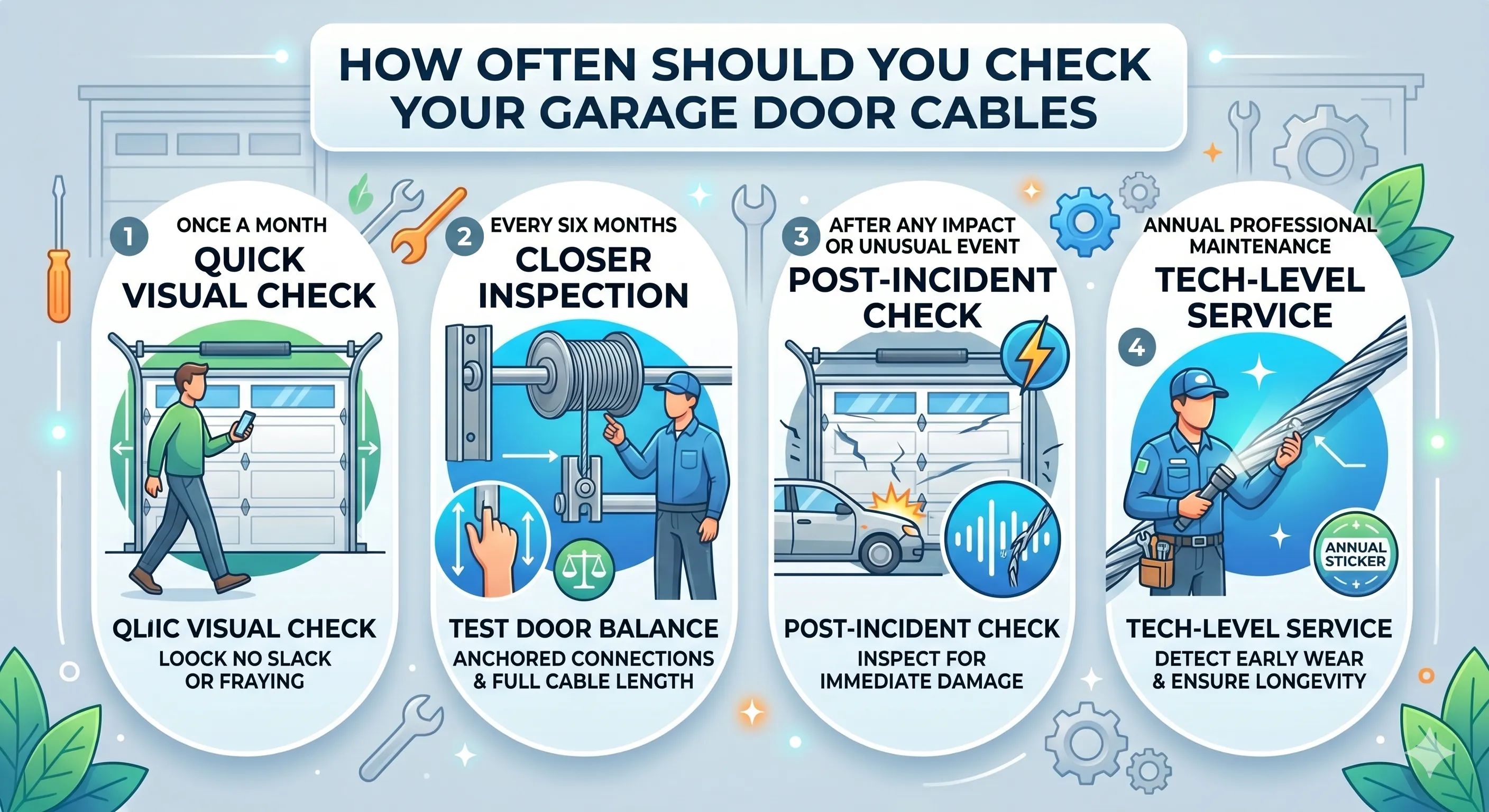
- Once a month, do a quick visual check. Walk along both sides of the door when it is fully closed and scan the cables for slack, fraying, rust, or anything that looks different from last time. This takes under two minutes.
- Every six months, do a closer inspection. Check the bottom bracket connection, the drum wrap, and the full length of both cables. Also, test the door balance by lifting it manually to waist height and releasing it. A balanced door holds its position. If it does not, a garage door tune-up may be needed to recalibrate the spring tension and restore proper balance.
- After any impact or unusual event. If the door was hit by a vehicle, experienced a power surge, or made an unexpected noise during operation, inspect the cables before using the door again.
- During annual professional maintenance. A technician can catch early-stage wear that is difficult to spot without experience or proper lighting. Annual service is one of the most reliable ways to stay ahead of cable failures.
For a deeper understanding of what drives repeated cable problems beyond normal wear, Why Does My Garage Door Cable Keep Coming Off? covers the recurring failure patterns worth knowing about.
When to Stop Using the Door Immediately
Some signs are not just early warnings. They mean the door should not be used until a professional has assessed it.
Stop using the door right away if you notice any of the following:
- The cable is visibly hanging loose or has come off the drum entirely.
- You can see a broken or separated section of the cable.
- The door dropped suddenly or closed unevenly during operation.
- One side of the door is noticeably lower than the other when closed.
- You heard a loud bang or snap when the door was in motion.
- The door will not stay open when lifted manually.
In any of these situations, do not attempt to force the door open or closed. Leave it in whatever position it is in and contact a technician. Operating a door with a severely compromised cable puts the door, the hardware, and anyone nearby at risk.
A professional garage door repair at this stage is not optional. It is the only safe path forward to restore the system to a condition where it can be used without risk of sudden failure or injury.
To know whether your cable has reached the point where replacement is the right next step, When Should You Replace Your Garage Door Cable? walks through the key decision points.
The IDA’s care and maintenance resource outlines the professional service standards homeowners should expect when a garage door system shows signs of serious wear.
Your Cable Is Talking to You. Are You Listening?
Garage door cables do not fail silently. They leave clues long before the problem becomes serious. A bit of rust here, a slight sag there, a sound that was not there last week, one side of the door moving slower than the other. These are not random quirks. They are early warnings that the system is under stress and that the window to act before a full failure is still open. The cost of acting on a warning sign is almost always far less than the cost of ignoring one.
For homeowners in Southlake, TX, First Responder Garage Doors brings the expertise needed to accurately assess cable condition, identify what is driving the wear, and give you an honest recommendation on what actually needs to be done. No guesswork, no unnecessary repairs. Contact us or give us a call to schedule an inspection and get ahead of the problem before a warning sign turns into a full breakdown.