
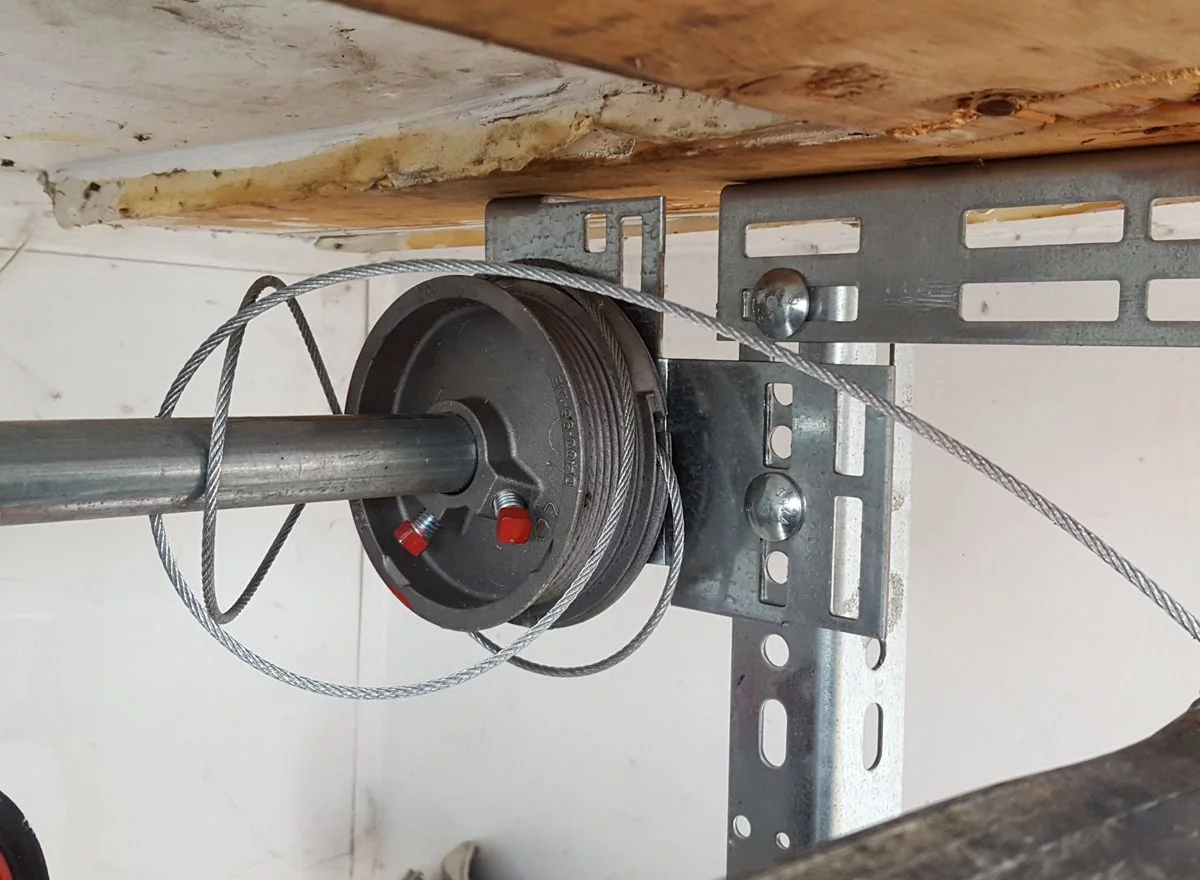
A garage door cable keeps coming off after being repaired is not bad luck, and it is not normal wear. It is a signal that something deeper inside the system was never properly identified or addressed. The cable itself is rarely the whole story. In most cases, a weakening spring that can no longer maintain consistent tension, a worn drum that has lost its groove, a failing bottom bracket, or mismatched cable tension from a previous repair is what keeps driving the failure. Fix the cable without fixing the cause, and the problem simply repeats. When repeated failures have left the cable kinked, stretched, or structurally compromised, broken garage door cable replacement becomes the more dependable solution over another round of reattachment.
This is one of the more frustrating garage door issues homeowners in Southlake, TX encounter, precisely because it feels like it should have been solved already. Until the root cause is identified and corrected, the garage door cable keeps coming off, no matter how many times it gets reattached. This guide walks through the real reasons behind recurring failures, what conditions make them worse, and what it takes to break the cycle for good.
A Single Repair Does Not Always Fix the Root Problem
If your garage door cable came off once and was simply reattached without a full inspection, the actual cause likely never got addressed. Cable reattachment is a quick task. Root cause diagnosis takes longer and requires a closer look at the entire system. Many recurring cable problems trace back to issues that are easy to overlook unless you know what to check.
A thorough garage door repair goes beyond putting the cable back in place. It includes inspecting the springs, drums, bottom brackets, and track alignment to confirm that nothing else in the system is contributing to the failure.
What often gets missed in a basic repair:
- Spring condition. A spring that is weakening but not yet fully broken can cause cables to lose tension irregularly, making the cable slip on and off over time.
- Drum alignment. If the drum is even slightly off-center, the cable will wear unevenly and eventually slip out of the groove again.
- Cable anchor integrity. A bottom bracket that is bent or starting to crack will release the cable repeatedly until the bracket itself is replaced.
- Track straightness. A track that is bent or shifted even a small amount can redirect cable tension in a way that pulls the cable off during operation.
If this is the first time you are dealing with the issue and want a broader overview of causes, Garage Door Cable Came Off One Side? Causes and Solutions covers the full range of reasons this happens.
Most Common Reason Why Garage Door Cable Keeps Coming Off Repeatedly
Recurring cable failures tend to fall into a predictable set of categories. Here are the ones that show up most often.
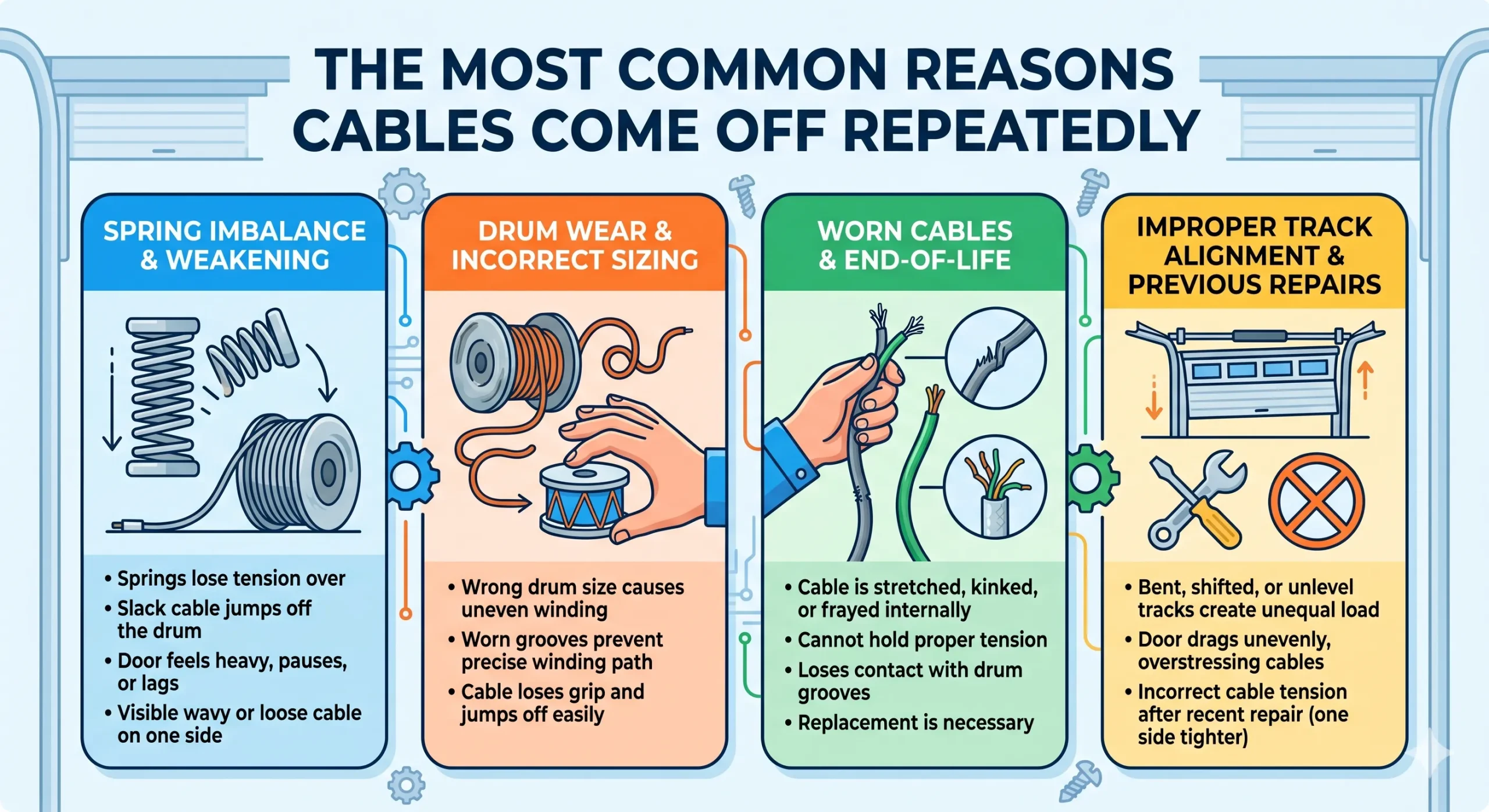
Spring Imbalance or Gradual Spring Failure
- Torsion springs do not always break all at once; they can lose tension gradually over months or years
- As the spring weakens, the cable on the affected side starts going slack at certain points during movement
- That slack causes the cable to jump off the drum or slip from the anchor point
- The cable may reattach briefly, but will come off again the next time spring tension is insufficient
Signs of gradual spring failure:
- The door feels heavier than usual when lifted manually
- The door pauses or hesitates at certain points during opening or closing
- One side of the door lags slightly behind the other during movement
- The cable appears loose or wavy on one side even when the door is fully closed
Drum Wear or Incorrect Drum Size
- Every garage door system requires drums sized to match the spring setup and door weight
- A wrong drum size causes the cable to wind incorrectly and come off repeatedly as tension distributes unevenly
- Drum grooves wear down over time, causing the cable to lose the precise winding path it needs
- Shallow or uneven grooves result in a cable that keeps jumping off during operation
Cable Worn Beyond Its Useful Life
- A cable reattached multiple times has likely been stretched, kinked, or partially frayed internally
- A worn cable will not hold proper tension regardless of how correctly it is wound
- It stretches under load, loses contact with the drum groove, and comes off again
- At a certain point, reattachment is no longer the right solution and full replacement is needed
What worn cables commonly look like:
- Visible kinking or bending that does not straighten out
- Fraying at the bottom bracket connection or along the drum wrap
- A slightly different diameter or stiffness compared to the cable on the other side
- Discoloration or rust along sections of the cable
Tracks That Are Bent, Shifted, or Out of Level
- Tracks guide the door through its travel path and directly affect how evenly the cables carry the load
- A bent, shifted, or unlevel track causes the door to drag unevenly, creating unequal cable tension
- The cable on the problem side takes on more stress and is far more likely to slip off the drum or snap
- Track problems develop slowly and are easy to dismiss until the cable fails again
Incorrect Cable Tension Set During Previous Repairs
- Both cables must be wound to the matching tension when reinstalled
- If one side is tighter or looser than the other, the door will not move evenly
- The cable carrying more tension will eventually slip or snap under the unequal load
- This is a common reason a cable comes off shortly after a repair, even when the reattachment itself was done correctly
Conditions That Make Recurring Cable Failures Worse
Some situations accelerate cable failure and make it more likely to keep happening even after repairs.
- High usage frequency. A garage door used four or more times a day puts significantly more wear on cables and springs than one used once or twice. Higher usage means components reach the end of their cycle life faster.
- Humidity and moisture exposure. Garages that are not climate-controlled or have poor sealing allow moisture to settle on the cables, drums, and springs. Rust weakens steel over time and increases the chance of fraying and snapping.
- Lack of lubrication. Cables and drums that are not lubricated on a regular schedule develop friction that causes uneven wear. This accelerates groove damage in the drum and increases strand stress in the cable.
- Previous low-quality parts. If cheaper cables or drums were installed at some point, they may not hold up as well under normal stress and are more prone to early failure.
- Deferred maintenance. Skipping annual inspections means small issues like a slightly loose drum screw or a beginning-to-fray cable go unnoticed until they cause a full failure. A professional garage door tune-up once a year is one of the most reliable ways to break this pattern before it becomes costly.
What Needs to Happen to Stop the Cable From Coming Off Again
Getting the cable to stay on requires more than a quick reattachment. Here is what a proper resolution typically involves.
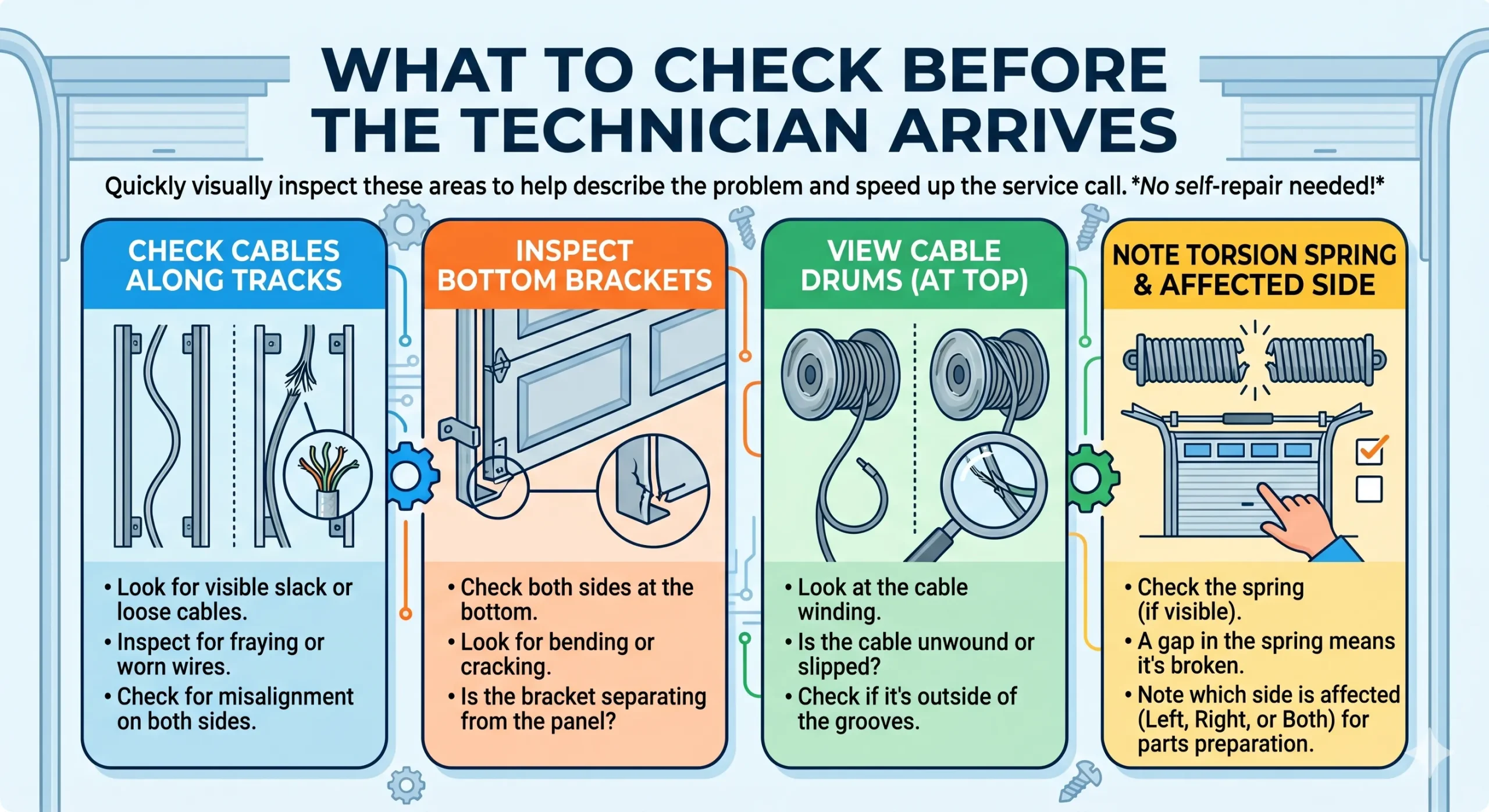
- Full system inspection. Both cables, both springs, all drums, bottom brackets, and the track system need to be checked before any repair work begins.
- Spring testing. The springs should be tested for current tension and remaining cycle life. If a spring is weakening, it should be addressed at the same time as the cable.
- Drum inspection and replacement if needed. Worn drum grooves or an incorrect drum size should be corrected to give the cable a proper winding path.
- Cable replacement, not just reattachment. If the cable has come off multiple times, replacing it entirely is more reliable than reattaching the existing one.
- Tension matching on both sides. After installation, both cables should be verified to carry equal tension before the door is tested.
- Track alignment check. The technician should confirm that both tracks are straight, level, and properly secured to the wall before the repair is considered complete.
To understand when the cable has reached the point where replacement is the right call rather than another repair, When Should You Replace Your Garage Door Cable? breaks down the key indicators.
Angi’s garage door inspection and maintenance guide walks homeowners through what a proper visual check should cover before calling a technician.
Simple Habits That Reduce the Risk of Recurring Failures
Once the underlying issue is properly resolved, keeping the cable in good condition comes down to consistent upkeep.
- Lubricate the cable and drum every six months. Use a lubricant made for garage door systems. Apply it along the cable length and around the drum to reduce friction and slow down wear.
- Test the door balance every few months. Disconnect the opener, lift the door to waist height, and release it. A balanced door stays in place. One that drops or rises has a tension issue worth addressing.
- Inspect the cables visually once a month. It takes less than a minute to check both cables for fraying, rust, or unusual slack. Catching it early prevents a bigger failure.
- Schedule a professional inspection every year. A trained technician can spot early-stage drum wear, weakening springs, and track shifts that are not visible to the untrained eye.
- Do not force the door. If the door feels resistant or makes unusual sounds, stop using it and have it checked. Forcing a door that is struggling makes underlying problems worse faster.
For a closer look at the specific warning signs that indicate your cable is close to failing, Signs Your Garage Door Cable Is About to Fail is worth reviewing before the problem gets to the point of another repair call.
DASMA outlines important safety practices every garage door owner should be aware of, particularly when operating or maintaining hardware under tension.
Stop the Cycle Before It Costs You More
A garage door cable that keeps coming off is telling you something, and that something is not bad luck. There is an underlying cause, and every time the cable is reattached without identifying and correcting that cause, the system takes on more damage. Worn drum grooves get worse. Cable strands accumulate micro-fractures. Spring tension continues to deteriorate. What starts as a manageable repair gradually becomes a more expensive and more urgent one, often at the worst possible moment.
For homeowners in Southlake, TX, First Responder Garage Doors goes beyond a quick reattachment to find what is actually driving the failure. Every recurring cable problem has a root cause, and that is exactly what their team is trained to identify and correct. If your cable has come off more than once, contact us or give us a call to schedule a thorough inspection and get a lasting repair done right the first time.