
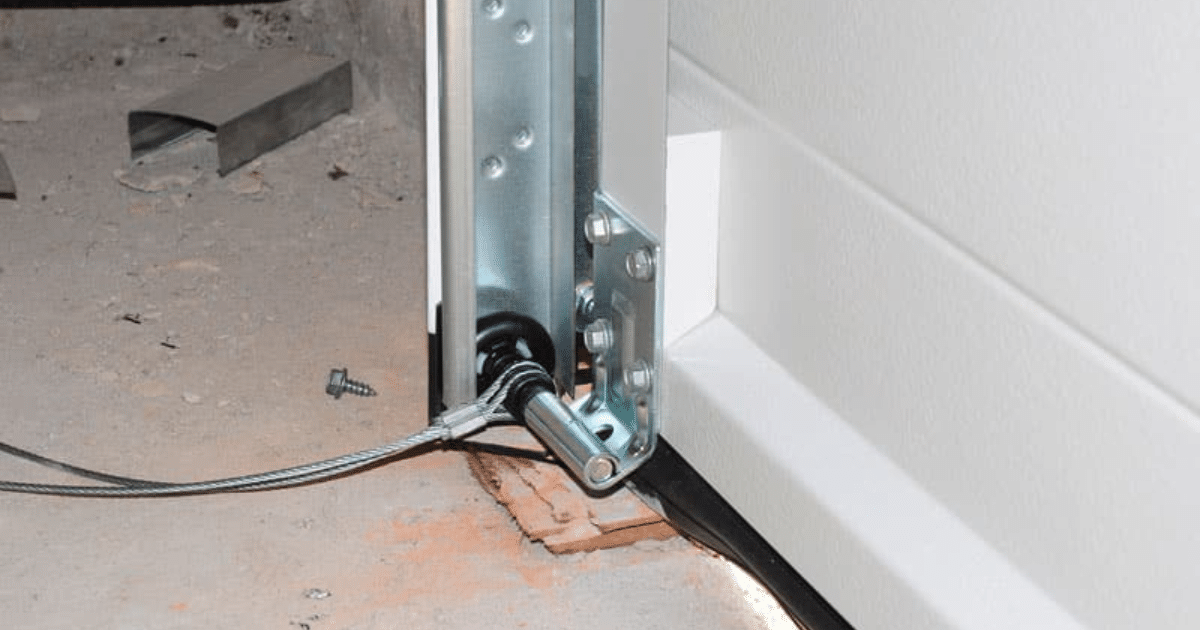
You hit the button. The garage door starts to move, then stops. One side goes up while the other barely budges. If this sounds familiar, your garage door cable has likely come off one side. This is not just a mechanical inconvenience. The cable is a critical load-bearing component that works with the torsion spring system to lift and lower your door evenly. When it slips, snaps, or unwinds from the drum, the entire system loses balance instantly, making the door both unreliable and potentially dangerous. In cases where the cable has snapped completely, broken garage door cable replacement becomes necessary before the door can operate safely again.
This is one of the more common garage door problems homeowners in Southlake, TX deal with, stemming from causes like spring failure, drum misalignment, bracket damage, or improper cable tension from a previous repair. Identifying the root issue matters as much as fixing the immediate problem. This guide breaks down exactly why it happens, what to look for, and what steps to take before calling a professional.
Complete Guide: Garage Door Cable Came Off One Side Causes
Before jumping into causes, it helps to understand the role cables play in your garage door system.
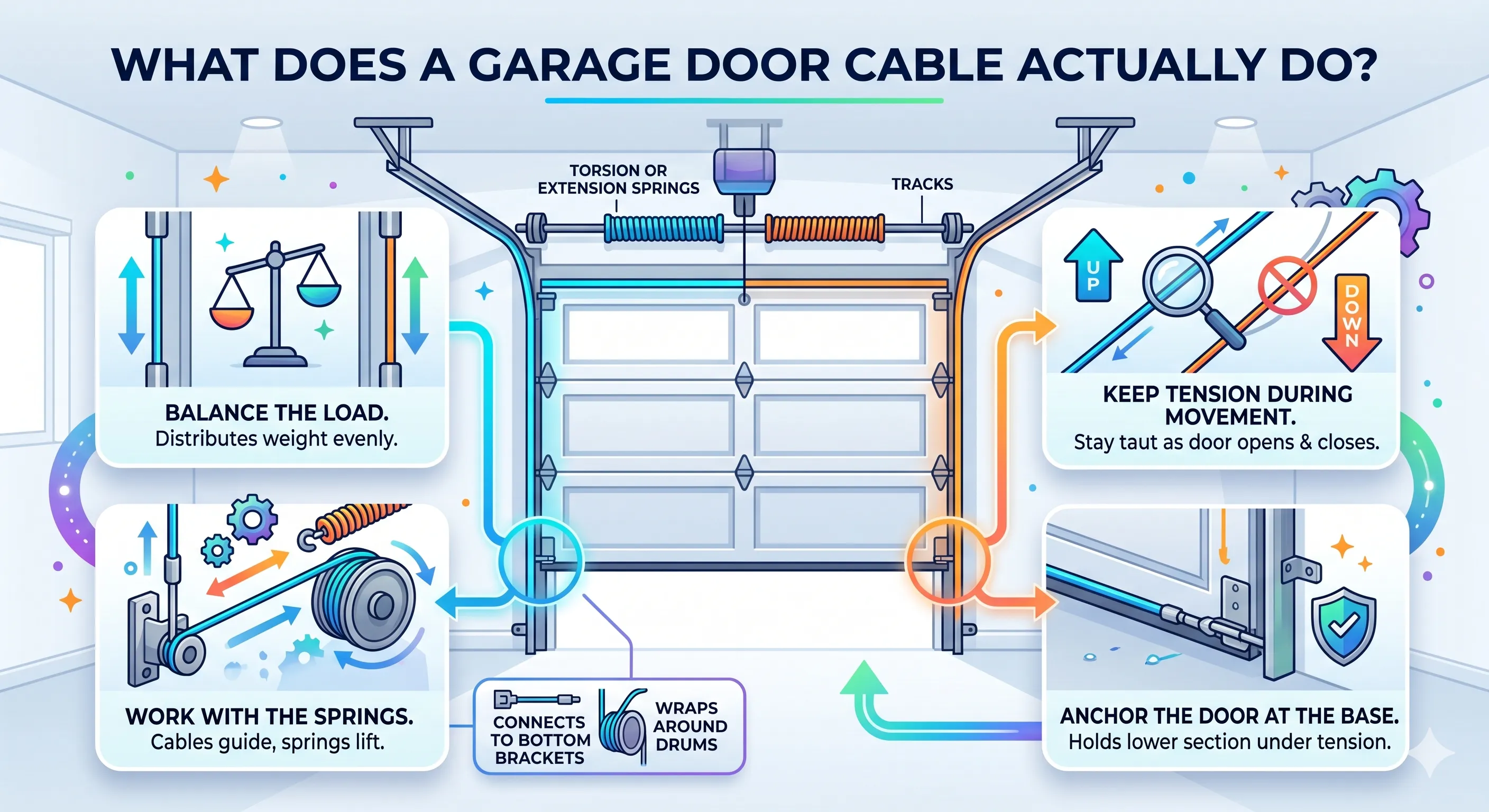
Garage door cables work alongside the springs to lift and lower the door evenly. Here is what they do as part of the system:
- Balance the load. Two cables run along each side of the door, distributing weight evenly every time the door moves.
- Work with the springs. The cables connect to the bottom brackets and wrap around drums at the top. The springs do the heavy lifting while the cables guide the door along the track.
- Keep tension during movement. Both cables stay taut as the door opens and closes. Slack on either side is a sign that something is off.
- Anchor the door at the base. The cable connects to the bottom bracket, which holds the lower section of the door in place under tension.
If you are also noticing recurring issues with the cable slipping off repeatedly, you may want to read Why Does My Garage Door Cable Keep Coming Off? to understand the deeper causes behind the pattern.
Common Reasons a Garage Door Cable Comes Off One Side
There is rarely just one explanation. Most of the time, it is a combination of wear, tension imbalance, or a small part that finally gave out. Here are the most common causes.
Broken or Worn Torsion Spring
The torsion spring is what provides the lifting force for your garage door. When a spring breaks, the cable on that side loses its tension and goes slack. A slack cable can easily slip off the drum or coil unevenly.
Key things to know about spring failure:
- You may hear a loud bang at the moment of failure, often described as a gunshot sound.
- Springs have a limited cycle life, usually around 10,000 cycles, and will wear out faster on doors used multiple times daily.
- A broken spring is one of the most common reasons a cable suddenly comes off one side without warning.
Cable Drum Coming Loose or Misaligned
The cable wraps around a drum at the top of the door track. If that drum shifts out of position or its set screws loosen over time, the cable can slip out of the groove and unwind incorrectly.
Why this happens:
- Set screws vibrate loose over the years of daily use.
- Drums on older systems may shift due to worn shaft connections.
- Even a small misalignment of a few millimeters is enough to throw the cable off its path.
Cable Fraying or Breaking
Cables are made of twisted steel strands. Over time, constant movement, moisture exposure, and tension stress cause those strands to fray and weaken. A partially frayed cable may still function for a while, but once it snaps or starts unraveling, it will come off entirely.
Common fraying locations include:
- The bottom bracket connection point, where the cable anchors to the door.
- The area where the cable wraps around the drum at the top.
- Any section exposed to moisture, rust, or rubbing against the track.
Bottom Bracket Failure
The bottom bracket anchors the cable at the base of the door. If this bracket cracks, bends, or pulls away from the door panel, the cable tension shifts and the cable comes loose from that side.
Signs of bottom bracket issues:
- Visible bending or cracking in the metal bracket.
- The cable appears to angle away from the door panel instead of running straight up.
- Rust or corrosion around the bracket connection point.
Door Coming Off the Track
If a garage door panel shifts out of the track, it puts uneven stress on both cables. The cable on the affected side can pull tight, snap, or slip off the drum entirely, depending on how far out of alignment the door has moved.
Common causes of track issues:
- Accidental vehicle contact with the door or track.
- Settling of the garage structure over time.
- Bent or dented track sections from long-term wear or impact.
Improper Cable Tension After a Previous Repair
If your door was recently serviced and the cables were not wound to the correct tension, one side may carry more load than the other. Over time, that imbalance causes the cable to slip, stretch, or jump out of position. This is one of the more overlooked consequences of incomplete garage door repair work, where the immediate issue gets addressed, but the tension calibration is never properly verified before the technician leaves.
What to watch for after a recent repair:
- One side of the door moves slightly faster or higher than the other.
- The cable appears looser on one side when the door is fully closed.
- The door makes grinding or uneven sounds during operation shortly after service.
Signs to Watch for Before the Cable Fully Fails
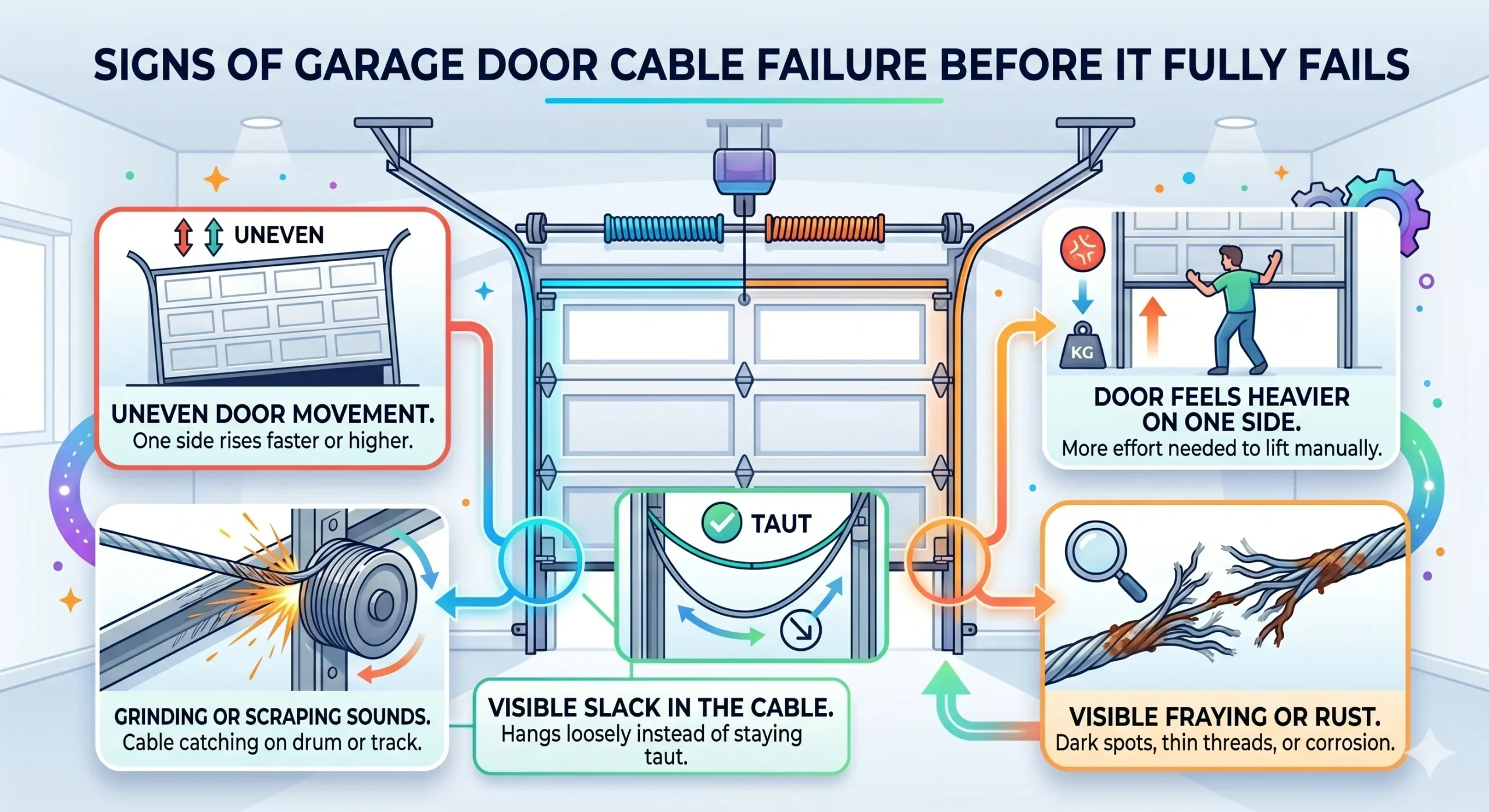
The cable rarely comes off without warning. Here are the early signs that something is off.
- Uneven door movement. One side of the door rises faster or higher than the other.
- Grinding or scraping sounds. The cable is catching on the drum or track as it moves.
- Visible slack in the cable. The cable hangs loosely instead of staying taut along the track.
- The door feels heavier on one side. When operating manually, one side takes more effort to lift.
- Visible fraying or rust. Dark spots, thin threads, or corrosion along the cable length.
Catching these signs early gives you time to act before the cable comes off completely. If you are seeing any of these warning signs and wondering what the next step might be, Signs Your Garage Door Cable Is About to Fail goes deeper into what to watch for and when to act.
Is It Safe to Use Your Garage Door With a Cable Off?
No. A garage door with a cable off one side should not be used.
The door is designed to operate with equal tension on both sides. Running it with a cable off creates several immediate risks:
- Sudden drop. A door under spring tension can fall without warning if the remaining cable gives way.
- Track damage. An unbalanced door drags against the track, bending or warping the metal over time.
- Panel stress. Uneven force causes the door panels to flex and crack, leading to more costly repairs.
- Opener motor strain. Forcing the opener to move an unbalanced door puts excessive load on the motor and can shorten its life.
- Injury risk. Anyone standing near the door when it drops or shifts is at serious risk of being struck.
For a broader look at common garage door problems and how they connect, The Spruce’s troubleshooting guide covers the most frequent issues homeowners encounter.
What to Check Before the Technician Arrives
You do not need to handle any repairs yourself. However, doing a quick visual check before calling can help you describe the problem clearly and speed up the service call.
- Look at both cables along the full length of the track. Check for visible slack, fraying, or misalignment on either side.
- Check the bottom bracket on both sides. Look for bending, cracking, or separation from the door panel.
- Inspect the cable drum at the top. See if the cable has unwound or slipped out of the grooves.
- Look at the spring. If the torsion spring is visibly separated in the middle, it is broken.
- Note which side is affected. Left, right, or both. This helps the technician prepare the right parts.
Do not attempt to adjust the spring or cable tension on your own. Both components are under extreme force and require proper tools and training to handle safely.
For guidance on keeping your system in good shape long-term and avoiding this problem in the future, When Should You Replace Your Garage Door Cable? covers what homeowners should know about cable lifespan and replacement timing.
This Old House offers a comprehensive overview of garage door components and what to expect from each part of the system over time.
How to Prevent a Garage Door Cable From Coming Off Again
Once the repair is done, a few simple habits can help prevent the problem from coming back.
- Schedule annual maintenance. A yearly garage door tune-up catches fraying cables, loose drums, and worn springs before they fail and is one of the most cost-effective ways to extend the life of the entire system.
- Lubricate moving parts regularly. Use a garage door lubricant on the cable drums, hinges, rollers, and tracks every six months. Avoid WD-40, as it attracts dust and dries out quickly.
- Test the door balance. Disconnect the opener and lift the door manually to about waist height. It should stay in place on its own. If it drops or rises, the spring tension needs adjustment.
- Check the cables visually once a month. A quick look at both cables takes less than a minute and can catch early signs of wear.
- Do not ignore small issues. If the door starts making new sounds or moving unevenly, have it checked before the problem grows.
What the Repair Process Generally Looks Like
Knowing what to expect during a professional repair can help you feel more confident about the process. Here is a general breakdown of what typically happens:
- Initial inspection. The technician checks both cables, the spring system, drums, and bottom brackets to get the full picture before starting any work.
- Cable assessment. If one cable has failed, the technician will check whether the second cable shows similar wear. Both are often replaced at the same time to keep the system balanced.
- Spring tension check. The spring is inspected and adjusted as needed. If the spring caused the cable failure, it will be replaced as part of the same visit.
- Drum repositioning. If the drum is loose or misaligned, it is repositioned and secured before the new cable is installed.
- Full cycle test. Once repairs are complete, the door is run through several full open and close cycles to confirm everything is tracking correctly and operating smoothly.
Get Your Garage Door Back on Track
A garage door cable that has come off one side is not something to wait on. The longer the door sits out of balance, the more stress it puts on the remaining hardware. The opener motor strains against an uneven load. The tracks absorb pressure that they were not designed to handle alone. The panels flex under tension that was meant to be distributed evenly across both cables. Every cycle run in this condition moves the system closer to a more serious and more expensive failure.
For homeowners in Southlake, TX, First Responder Garage Doors brings the diagnostic experience and technical precision needed to identify exactly what caused the cable to come off and complete the repair correctly the first time. If your door is currently out of balance or a cable has visibly slipped or snapped, do not force it open or closed. Contact us or give us a call to schedule a service visit and get your garage door operating safely and reliably again.