

Although your garage door is the largest moving feature in your home, it relies on its springs to shoulder most of the work, as these components counterbalance the door’s weight and allow it to open and close with minimal effort from you or your opener.
When the springs begin to lose tension over time or eventually become a broken garage door spring, recognizing the early signs that a garage door spring adjustment is needed becomes essential, because timely garage door repair protects your safety and helps prevent larger issues within the system. By understanding what to look for, you can reach out to a professional as soon as the problem appears, before the strain spreads to the opener, cables, or tracks.
Understanding Garage Door Springs and Their Function
Garage door springs store the mechanical energy that makes lifting and lowering the door possible as the tension tightens while the door closes and releases as it opens, allowing the system to move with a steady, controlled flow. Because these springs support most of the door’s weight, the motion feels surprisingly light whether you’re operating it manually or using an automatic opener.
Garage doors rely on two primary spring systems: torsion springs and extension springs, each playing a different role in how the door moves. Both depend on proper tension for the system to stay balanced, because when that balance shifts, the door becomes unstable and places strain on other components, increasing the chance of safety concerns. The sections below take a closer look at how these two spring types support the door’s movement.
For more insight into early warning signs that your door is beginning to lose its balance, explore “Garage Door Spring Adjustment: The First Signs Your Door Is Losing Balance.”
How Garage Door Torsion Springs and Extension Springs Support Door Movement
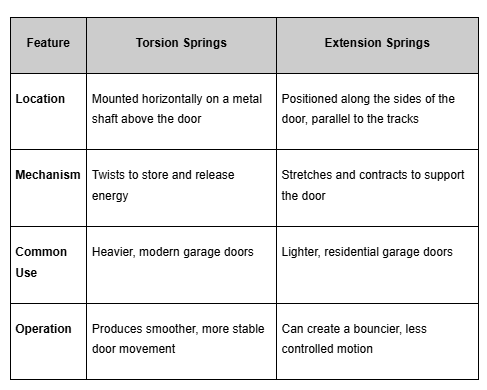
Torsion springs sit on a metal shaft above the door opening and support movement as they twist to store and release energy, creating smooth, even motion that suits heavier doors and keeps them operating with reliable stability.
Extension springs run along the sides of the door, next to the horizontal tracks, and counterbalance the door’s weight as they stretch during closing and contract during opening, making them a common choice for lighter residential doors.
Because each system uses a different method to generate tension, torsion springs rely on rotational force, and extension springs on linear force. The way they manage the door’s weight varies, shaping how the door moves and how balanced it feels.
Why Proper Garage Door Spring Adjustment Ensures Safe and Balanced Operation
A garage door operates safely and efficiently when its springs hold the correct amount of tension, because balanced tension keeps the door from rising on its own or dropping unexpectedly when positioned halfway. When that balance is maintained, the door can open and close smoothly, and other components remain free from unnecessary strain.
If the springs fall out of balance, the garage door opener must work harder to lift the door, which places stress on the motor and internal parts over time and increases the likelihood of system wear. Ensuring the springs hold the right tension keeps the entire mechanism operating as intended.
Because garage door springs store an enormous amount of force, the adjustment process becomes hazardous if that tension releases suddenly, since the spring or surrounding hardware can shift with significant force and cause serious harm or damage, especially during garage door installation when components are being set under load. When the springs require correction, relying on trained professionals ensures the adjustment is handled properly and the door continues to operate safely.
Warning Signs of Garage Door Spring Problems
Recognizing the early signs of a weakening garage door spring becomes easier when you understand how these changes show up over time, because although a sudden bang in the garage often signals that a spring has broken, many warning signs appear more gradually and begin to influence how the door moves and how reliably it operates. You might notice the door opening more slowly, see worn areas on the springs, or find the door struggling to close fully, which can even interfere with the sensors when the door cannot settle in the right position because the springs are no longer supporting it properly. Catching these subtle shifts helps protect you and preserves the system’s overall condition as more noticeable problems, like difficult movement or sudden dropping, start to appear.
To explore more signs related to unusual sounds and motion, read “Garage Door Spring Adjustment: What Unusual Noises and Jerky Movement Usually Mean.”
How Difficulty Opening or Closing Indicates Issues with Adjusting Garage Door Springs
Difficulty lifting or lowering the door often becomes the first clear sign that the springs need attention, because when the opener is disengaged, and the door feels significantly heavier than it should, the springs are no longer balancing the door’s weight, and the system is beginning to lose tension. As the springs weaken, the opener has to work harder to move the door, which may cause the motor to sound louder or strain during operation, and the door may lift unevenly or shake along the track as one side loses more support than the other. These changes show that the springs are no longer providing the assistance the system relies on and that professional adjustment may be needed to restore proper balance.
Common indicators include:
- A door that feels heavy when lifted by hand
- An opener that struggles to raise the door or cannot raise it fully
- A door that moves at an angle rather than staying level during travel
When Sudden Slamming or Rapid Dropping Suggests a Broken Garage Door Spring
A door that falls quickly or slams shut signals a serious problem with the spring system, because when a spring breaks, it can no longer hold tension or support the weight of the door, leaving the door to drop with its full force. This creates an immediate hazard for anyone or anything beneath it and places heavy stress on the door and surrounding components.
Once a spring has failed, the issue cannot be corrected through a minor adjustment, because a broken spring no longer functions and must be replaced before the system can operate safely again, which is why a regular garage door tune-up matters for catching wear early. Continuing to use the door in this condition risks bending panels, damaging the tracks, and overloading the opener. A trained technician can restore safe operation by replacing the damaged spring and securing the door properly, ensuring the system works as intended once the repair is complete.
Determining When You Need Garage Door Spring Repair or Replacement
Although a simple garage door spring adjustment can sometimes correct balance issues, there eventually comes a point when the spring needs to be repaired or replaced, because springs are designed to last only a certain number of opening and closing cycles before their strength begins to fade. Understanding the difference between a spring that has merely lost tension and one that has reached the end of its lifespan helps you make the right decision for your garage door.
Since garage door springs operate under significant force, any work beyond basic upkeep should be handled by a trained professional, because identifying the exact source of the problem and addressing it safely requires experience and the proper techniques. The sections below explain the physical signs that indicate when repair or replacement is necessary.
For a deeper look at how to tell whether you’re dealing with a broken spring or a more complex issue, explore “Garage Door Spring Adjustment: How to Tell If You’re Facing a Broken Spring or a Bigger Issue.”
Physical Indicators That Point to Garage Door Spring Repair or Garage Door Spring Replacement
A quick look at your springs can reveal a great deal about their condition, because the most obvious indicator of failure is a visible gap in the coils of a torsion spring, which appears when the spring has broken and can no longer support the door. Extension springs show different signs, such as hanging lower than usual or appearing bent or misshapen.
Other visible changes can also suggest trouble, including rust or corrosion that may weaken the metal and shorten the lifespan of the spring, which is why scheduling broken spring replacement at the first clear sign of deterioration is often the safest move. Each type of spring displays its own warning signs, but any significant change should be evaluated by a professional, since the wire size and length are calibrated to the weight of your specific door and must remain within exact specifications for the system to work correctly.
Common visual indicators include:
- A noticeable gap in the coils of a torsion spring
- Extension spring coils that appear stretched or distorted
- Rust or corrosion forming along the spring surface
How to Recognize When Torsion or Extension Springs Are No Longer Functioning Correctly
Identifying which type of spring is failing often comes down to where the problem begins, because torsion springs tend to reveal themselves through loud creaks or bangs from the metal shaft above the door, along with cables that appear loose or out of place as the springs lose the ability to keep them wound. Extension spring issues, on the other hand, usually show up along the sides of the door, where one side may sit lower than the other or move with a jerky, uneven motion when a spring has weakened or broken and can no longer pull its share of the weight. Since both systems play a role in lifting the door, determining the true source of the issue requires careful inspection, and someone with the proper tools and experience can evaluate the system accurately by checking the shaft for torsion spring problems or the side tracks for extension spring concerns.
It’s important to recognize the signs that your garage door springs may need attention, because difficulty opening or closing the door, unusual noises, or rough, uneven movement often indicate that something in the system is no longer working as it should. Reaching out to a professional when these issues appear helps keep the door operating safely and prevents more serious problems from developing as the springs lose their effectiveness. Whenever you notice these warning signs, contact a trained expert to ensure the springs are evaluated and corrected properly, as the reliability of your garage door depends on their support.
When those warning signs show up, First Responder Garage Doors is ready to step in with the right experience to restore safe, balanced operation before the problem escalates. If your door feels off, sounds different, or isn’t moving the way it should, don’t wait for a complete failure. Contact us today or give us a call to schedule a professional inspection and get your system back to smooth, reliable performance.
Frequently Asked Questions
Garage door spring adjustment becomes dangerous when the springs release their stored force unexpectedly, because the tension they hold is strong enough to cause severe injury if a component slips or breaks during the process. When the spring releases its energy without control, the door can drop, or hardware can move with sudden speed, which is why handling these parts requires training and proper equipment.
You can usually tell which spring is failing by where the symptoms appear, because issues with a garage door torsion spring tend to show up above the door near the shaft, while problems with garage door extension springs appear along the sides, where the door may hang unevenly or show a stretched or sagging spring. A professional can identify the cause accurately once the system is inspected.
Both springs often need attention when one breaks because they age at the same rate and carry the same workload, which means the remaining spring is already worn and more likely to fail soon after the first one. Replacing both at the same time keeps the system balanced and prevents another sudden failure.
Loud or unusual noises often point to spring trouble because a sharp bang can signal a broken spring, while creaking, popping, or groaning sounds may suggest the coils are wearing down or losing tension, which affects how the system supports the door described on Wikipedia. When these sounds keep returning during normal operation, they usually indicate that garage door spring repair is needed.
A garage door feels heavier when the springs lose tension because they no longer store enough energy to counterbalance the weight of the door, forcing you or the opener to lift more of the load. When this happens, the door can no longer move smoothly, and the loss of tension becomes a clear sign that adjustment is needed.
Certain visual changes signal spring trouble, because a torsion spring that has broken will show a visible gap in the coil, while extension springs may look stretched, uneven, or hang lower than normal. Rust or corrosion also suggests weakening metal that may soon require garage door spring replacement.
Irregular movement often points to a spring imbalance because uneven tension makes one side of the door rise faster than the other, which causes shaking, angled lifting, or repeated stopping. These symptoms show that the springs are no longer supporting the door evenly and that proper adjustment may be needed.
A garage door may stop mid-travel when a spring breaks because the opener detects resistance it was not designed to handle and prevents the door from moving further to avoid damage. Without the spring balancing the weight, the opener senses the extra load and halts the motion for safety. All these things happen to help protect the garage door and the opener when a spring breaks.
Garage door torsion springs and extension springs keep the door moving at a steady, controlled speed by applying a calibrated counterforce that offsets the door’s weight through the entire travel, as explained by Boston University. The result is smooth, predictable motion that prevents the door from shooting upward or slamming down, which also reduces strain on the opener because the springs carry most of the load when properly tensioned.
A misaligned spring disrupts the balance of the system because uneven tension causes the door to lift at an angle, move unpredictably, or let cables slip out of place, which creates instability during operation. When this happens, the system often needs garage door spring repair to restore proper alignment and safe movement.