

Your garage door works smoothly largely because of its springs, even though they are easy to overlook. These parts carry most of the door’s weight, which allows the opener to lift and lower the door without strain. As the springs handle this load day after day, their tension gradually weakens over time, which can quietly affect how well the door stays balanced.
Because the shift happens slowly, the early signs often blend into the background and are easy to miss. Still, recognizing those small changes matters, since it helps keep the door operating safely and supports consistent garage door maintenance before bigger issues develop or lead to costly garage door repair. When you know what to watch for, you’re more likely to catch balance problems early, before they turn into something more disruptive.
Garage Door Spring Adjustment and Why Doors Lose Balance
Garage door springs carry the door’s weight by storing energy and releasing it in a steady cycle. They tighten when the door closes, so energy builds through twisting or stretching, then unwind when the door opens, so lifting feels controlled instead of heavy. After thousands of open-and-close cycles, the stored tension gradually fades, and the door can start losing balance in ways that may seem minor at first. Restoring the proper tension through garage door spring adjustment helps the system work the way it was designed, since balance depends on springs that can still counter the door’s weight.
When a door is out of balance, strain spreads through the whole system, because the opener and hardware have to carry more load than they were built for. The motor works harder, the lift feels uneven, and wear speeds up across cables, tracks, and moving parts, which often leads to garage door spring repair being needed sooner than expected. That’s why it matters to understand what causes balance loss and which early signals hint that tension is drifting, especially before a small spring issue turns into a bigger problem.
For a deeper look at those early warnings, check out our guide, “What Are the Signs You Need a Professional Garage Door Spring Adjustment?”
What Causes Imbalance and the Need for Adjusting Garage Door Springs
Springs naturally weaken over time, since every door movement stretches and compresses them through repeated cycles. With enough use, the metal slowly loses resilience, and the constant pull of the door’s weight adds to that fatigue, which is why even well-built springs eventually slip out of ideal tension. Whether the system uses torsion or extension springs, wear follows the same basic pattern because all springs are doing the same heavy work every day.
As that tension drops, warning signs tend to show up in the door’s behavior. The door may feel heavier than usual, resist staying halfway, or move in a way that seems less smooth and more strained, especially as the opener compensates for the missing support. Those changes usually point to springs that are no longer balancing the door correctly, which is when adjusting garage door springs becomes part of getting the system back into a safer range.
If the imbalance is ignored, pressure keeps building on the opener, cables, and track system, which can accelerate damage across parts that rely on even lift. Some cases involve tension that has simply drifted, while others involve visible wear such as stretching, gaps, or corrosion, which is when garage door spring repair or garage door spring replacement becomes necessary to prevent sudden failure.
How Spring Failure Can Lead to Garage Door Spring Repair or Garage Door Spring Replacement
When early balance problems go unnoticed, the springs continue wearing down until failure becomes more likely, often breaking suddenly with a sharp, startling snap. Once a broken garage door spring occurs, the door loses the counterweight that keeps it stable, leaving it extremely heavy and unable to operate normally. At that stage, garage door spring adjustment is no longer enough, since the spring can’t be restored once it has snapped, making garage door spring replacement the correct next step.
Trying to run the door with a broken spring creates a serious risk, because the opener is not meant to lift the full weight on its own, and the door can drop faster than expected. Since springs hold high tension even when damaged, handling them without the right experience can lead to injury, which is why this kind of failure is typically addressed through professional garage door spring repair rather than trial-and-error.
In dual-spring setups, replacing both springs is often recommended even if only one has failed, because the pair has usually aged through the same number of cycles. When one breaks, the other is typically close behind, so replacing both at the same time restores balance and reduces the chance of another sudden breakdown soon after, especially in a garage door installation where matched springs are essential for stable performance from day one.
First Warning Signs of a Broken Garage Door Spring
Most garage door systems give subtle warnings before a spring fails, since tension usually drifts long before a full break happens. Those early shifts are the door’s way of signaling that the spring balance is no longer where it should be, which makes noticing them early an important part of keeping the system dependable. When the clues are caught in time, you can address spring tension before it turns into a sudden failure that interrupts daily use and creates safety concerns.
The signs tend to show up in ways you can see or hear, because the springs affect nearly every part of how the door moves. You might notice that the springs look different from what they used to, or that the door no longer travels as smoothly as before, especially as the opener begins compensating for weaker support. Once those changes start appearing, they usually mean the system is working harder than usual, which is why paying attention to them helps prevent larger problems from developing.
For more details on what these changes point to, read “Garage Door Spring Adjustment: What Unusual Noises and Jerky Movement Usually Mean.”
Visible Damage Patterns Linked to Broken Garage Door Spring Issues
A close look at the springs often reveals whether a problem is building, because many forms of spring failure leave visible evidence. When a spring shows clear wear or separation, it usually means tension has already dropped to an unsafe level, and the part may be close to failing. In these cases, the issue typically goes beyond what a garage door spring adjustment can restore, since weakened or damaged springs are no longer able to deliver reliable balance.
Before a spring breaks completely, you may notice one or more of these visible patterns, each signaling that the stability of the system is at risk:
- A visible gap: If a torsion spring has a several-inch space in the coil, it indicates the spring has snapped.
- Stretched coils: If garage door extension springs look unusually long or slack even when the door is closed, they are no longer holding proper tension.
- A crooked or uneven door: When one side lifts higher than the other, it often points to a spring losing strength or failing on one side.
- Loose or displaced cables: If lift cables appear slack or out of position, it can happen when a spring loses tension or breaks and stops supporting the door evenly.
Movement and Noise Changes That Often Appear Before Garage Door Spring Repair
Even when spring damage isn’t obvious at first glance, the door’s movement and sound can reveal that the springs are no longer doing their job. As tension weakens, the springs can’t counterbalance the door’s weight the way they should, which forces the opener and hardware to absorb more load than usual. Because that strain changes how the door travels, you’ll often notice the difference in the way it feels and sounds before you see anything else.
If these motion or noise shifts start appearing, they usually point to springs that are losing their ability to stabilize the door:
- Jerky or sluggish travel: The door may hesitate, shake, or move in uneven bursts instead of gliding smoothly.
- A faster, heavier close: When the door drops more quickly than usual or lands with extra force, it often means spring tension has fallen significantly.
- An opener that sounds strained: The motor may grow louder or seem to labor as it takes on more of the door’s weight.
- A heavier feel during manual use: If the door feels unusually weighty when moved without the opener’s help, the springs are no longer providing normal lift support.
Taken together, these changes are strong signs that a garage door spring issue is developing, especially when movement becomes less controlled, and the system sounds like it is working harder to do the same job, making a timely garage door tune-up an important next step.
Garage Door Torsion Spring vs. Garage Door Extension Springs Imbalance Clues
Every garage door spring has the same core job, which is balancing the door’s weight so it can rise and lower with control, but the two main spring types do that work in different ways. A garage door torsion spring sits on a metal shaft above the door and stores energy by twisting, while garage door extension springs run along the sides near the tracks and store energy by stretching and contracting. Because their setups are different, the way they show imbalance tends to look different, too, which is why recognizing the spring type makes it easier to understand what the door is trying to tell you when balance starts to slip.
You can usually identify the system by where the springs are located, since torsion springs are visible above the door and extension springs sit parallel to the tracks on either side. Once you know which style you have, the early clues of tension loss become clearer, because torsion and extension springs fail in patterns that reflect how they carry the door’s load. Those patterns matter, especially when the first signs of imbalance appear gradually and can be missed unless you know what to look for.
For a closer breakdown of what those signs really mean, see “Garage Door Spring Adjustment: How to Tell If You’re Facing a Broken Spring or a Bigger Issue.”
Garage Door Torsion Spring Warning Signs: Homeowners Notice Early
With a garage door torsion spring, imbalance often shows up in clear, mechanical ways because the spring transfers force directly through the shaft above the door. A strong visual clue is a noticeable gap in the coil, which usually means the spring has snapped and can no longer store energy. Homeowners also often hear a sudden loud bang from the garage, which is the sound of that stored tension releasing all at once when the spring breaks.
If a door uses two torsion springs and one begins failing, the door may still move, but typically lifts unevenly, since one side is no longer counterbalanced the same way. Cables on the weakened side may look slack or misaligned because the system is no longer holding equal tension across the door. Even before a complete break, a torsion spring that is losing strength can make the door feel unusually heavy and cause the opener to sound strained, which are reliable signs that the spring is no longer supporting the door’s weight effectively.
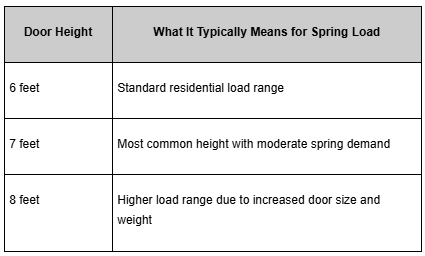
This table is only meant to show that torsion spring load changes with door size, which explains why balance issues can appear earlier on heavier or taller doors, especially once spring tension begins to weaken, often signaling the need for broken spring replacement.
Garage Door Extension Springs: Symptoms That Suggest Balance Loss
With garage door extension springs, imbalance usually shows up through the way the springs stretch and recoil along the sides of the door near the tracks, since they rely on steady tension to keep movement even. As that tension fades, the door may begin traveling in a jumpy or unsettled way rather than with the smooth rise and controlled descent you’re used to, and while you won’t hear the sharp bang that often comes with a broken torsion spring, you’ll feel that something is off as you operate the door. Extension spring trouble often becomes visible as well, especially when coils look spaced out even with the door closed, which signals that the spring has been pulled beyond its healthy range, and it can also show up as a bouncy or jerky travel pattern when the weakened springs fail to pull evenly. If one spring is wearing faster than the other, the door may lift at an angle or hesitate in the track because one side is losing support sooner, and as balance continues to slip, the door can start to feel noticeably heavier during manual lifting, since the springs are no longer countering the weight the way they should.
Spotting early signs that your garage door springs are slipping out of balance matters more than most homeowners realize, because small changes in sound, movement, or visible wear often signal a problem before it becomes disruptive or unsafe. When those warnings are noticed early, the door is more likely to stay reliable and steady, rather than pushing the system toward heavier strain that can lead to larger repairs or a shortened door lifespan. Paying attention to symptoms linked to either torsion springs or extension springs also helps you protect the rest of the system, since balance issues rarely stay isolated once they begin. If something feels off and you want clarity on what you’re seeing or hearing, it’s always reasonable to speak with a qualified garage door professional, especially when spring tension and door stability are involved.
When you’re ready for a closer look, First Responder Garage Doors is here to help you get answers without the guesswork, focusing on balance issues early so your door stays safe, steady, and dependable. Our team understands how quickly spring tension problems can escalate, which is why they prioritize clear assessments and straightforward support for homeowners who notice something changing. Contact us today or give us a call to schedule an expert evaluation.
Frequently Asked Questions
Yes, because garage door springs hold extreme tension that can release violently if handled incorrectly. When someone without training attempts an adjustment, the spring or hardware can snap or shift suddenly, which can cause serious injury. For safety, spring work is best left to experienced technicians who are equipped to manage that level of force.
Adjustment only helps when a spring has weakened slightly but remains intact, so visible damage is the clearest sign that replacement is necessary. If a torsion spring shows a gap in the coil, or extension springs look stretched, misshapen, or heavily corroded, the spring has reached failure territory where tension can’t be restored reliably. In those cases, replacement is the safe and practical fix.
Operating an unbalanced door forces the opener and hardware to carry the weight the springs should be supporting, which accelerates wear across the motor, gears, cables, rollers, and tracks. As strain builds, the door often becomes noisier and less stable while the springs continue weakening. Left unchecked, the imbalance can end in a sudden spring break, creating a major safety risk and a larger repair situation.
You’ll usually notice changes in weight, movement, or control as spring tension drops, especially when the door starts feeling unusually heavy, refuses to stay halfway open, closes too fast, or travels with jerks and uneven motion that weren’t there before. When the opener begins sounding strained, or the door behaves inconsistently from one cycle to the next, those are clear signals that balance is slipping, and adjustment may be needed, which lines up with how garage door systems are designed to function, as explained by Wikipedia.
Torsion spring problems typically show up as a door that feels heavier and an opener that works harder, even if movement stays fairly straight until the spring fails. Extension spring issues more often create bouncy, jumpy motion and uneven lifting, since there are usually two side-mounted springs that can weaken at different rates. Because of that setup, extension systems are more likely to produce crooked travel early on.
Look at where the springs sit, since placement is the easiest identifier. A torsion spring is a single, thick coil mounted above the door on a horizontal shaft, while extension springs are smaller coils running along the tracks on both sides. The location tells you the type instantly, even if the door is closed.
Correctly sized springs keep the door stable through its travel, so the door should feel manageable and remain balanced rather than rushing upward or dropping downward. If the door feels excessively heavy, shoots up too quickly, or refuses to hold a mid-position, the springs may not match the door’s weight and height. Since sizing depends on specific door and spring measurements, accuracy is usually confirmed through a professional assessment.
In most cases, yes, because both springs have worked the same number of cycles and usually wear at a similar pace. When one fails, the other is often near the end of its lifespan, which means leaving it in place increases the odds of another break soon after. Replacing both restores balance and reduces repeat failure.
No, because once a spring breaks, the door loses the counterbalance that controls its weight and speed, which can make it dangerously heavy and capable of dropping without warning. The opener may also be pushed beyond its design limits as it tries to lift a load it was never meant to carry, increasing the chance of damage or sudden failure, as highlighted by InterNACHI. Until the spring is replaced, the door should be treated as unsafe to operate.
Spring lifespan depends on type and usage, since each open-close cycle slowly reduces tension. Extension springs often last around 5,000 to 10,000 cycles, while torsion springs commonly last about 15,000 to 20,000 cycles, which translates to several years for many households. As usage increases, spring issues tend to appear sooner, especially once the door begins showing balance changes.