

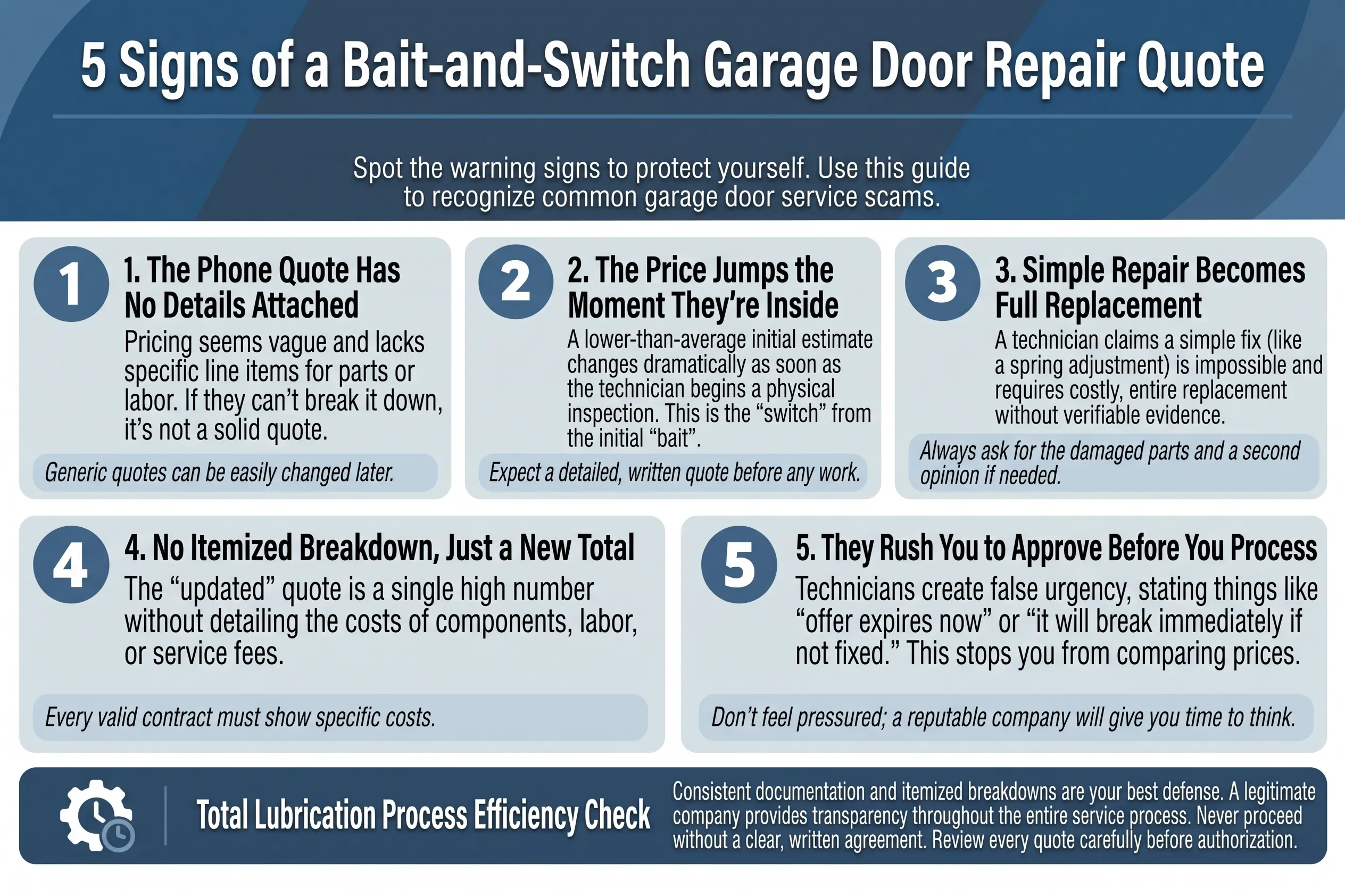
A bait-and-switch quote starts with a low, appealing number over the phone, then grows once a technician is standing in your garage and you’ve already committed time to the visit. The tell isn’t that the price changed; it’s how it changed: no itemized reason, no written explanation, just a bigger total and pressure to approve it quickly. A legitimate price adjustment is explained line by line and put in writing before any new work begins. If you’re only getting a new number with no breakdown behind it, that’s the bait-and-switch showing itself.
Even when you need emergency garage door repair right away, you shouldn’t have to accept a price that doesn’t match what you were quoted.
Key Takeaways
- A vague, unusually low phone quote is often the bait. The in-person number is the switch.
- Legitimate price changes come with a specific, visible reason, not just a bigger total.
- A written, itemized quote before work starts is the single best protection you have during any garage door repair call.
- “You actually need a full replacement” after a simple repair call is one of the most common switches.
- You’re allowed to pause and ask for time, even after a technician has already arrived.
- If the new price isn’t explained line by line, ask for that explanation before agreeing to anything.
Phone Quote vs. Bait-and-Switch Quote
Signal | Honest phone quote | Bait-and-switch quote |
What’s included | States what the number does and doesn’t cover | Stays vague on scope, just gives a number |
What happens on arrival | Confirms the estimate or explains a visible change | Price jumps with no visible reason given |
How the increase is presented | Broken down by part and labor | Delivered as one new total |
What triggers the “upgrade” | A specific problem the technician can show you | A general claim that “it’s worse than we thought” |
Your options once you’re quoted | Time to review, ask questions, or decline | Pressure to approve before you can think it through |
1. The Phone Quote Has No Details Attached
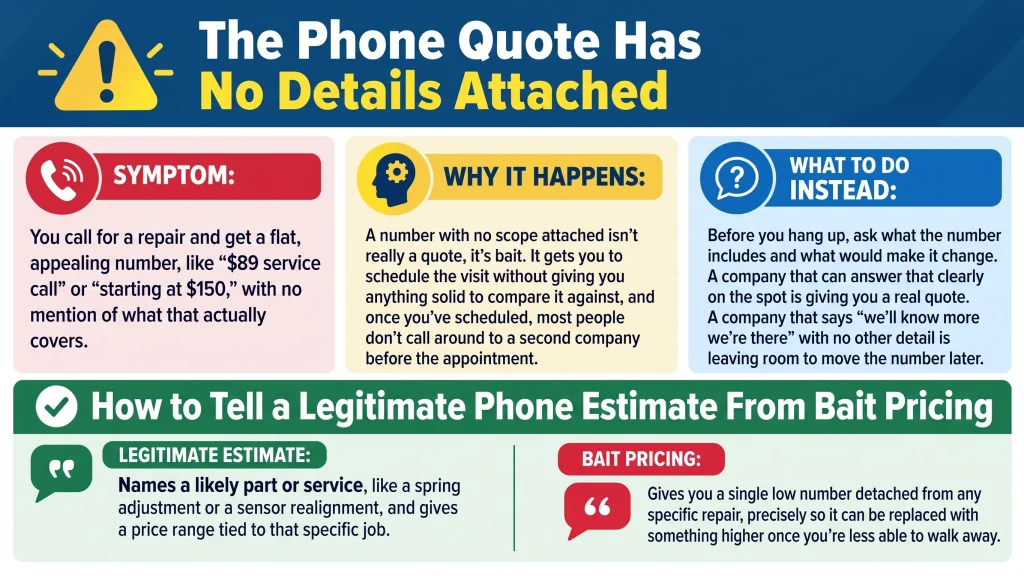
Symptom: You call for a repair and get a flat, appealing number, like “$89 service call” or “starting at $150,” with no mention of what that actually covers.
Why it happens: A number with no scope attached isn’t really a quote, it’s bait. It gets you to schedule the visit without giving you anything solid to compare it against, and once you’ve scheduled, most people don’t call around to a second company before the appointment.
What to do instead: Before you hang up, ask what the number includes and what would make it change. A company that can answer that clearly on the spot is giving you a real quote. A company that says “we’ll know more once we’re there” with no other detail is leaving room to move the number later, and that room is exactly where the switch happens.
If that same call also came with alarming language about your door being unsafe, read 6 Signs a Same-Day Emergency Garage Door Quote Is a Scare Tactic, since the two tactics often show up together.
How to Tell a Legitimate Phone Estimate From Bait Pricing
A legitimate phone estimate names a likely part or service, like a spring adjustment or a sensor realignment, and gives a price range tied to that specific job. Bait pricing gives you a single low number detached from any specific repair, precisely so it can be replaced with something higher once you’re less able to walk away.
2. The Price Jumps the Moment They’re Inside Your Garage
Symptom: The technician steps into your garage, looks at the door for a minute, and comes back with a number two or three times higher than what you were quoted on the phone.
Why it happens: Once a technician is on-site and you’ve cleared your schedule for the visit, most people feel pressure to just get it over with rather than start the search over with a new company. The jump counts on that reluctance.
What to do instead: Ask what specifically changed between the phone call and the in-person look. A real answer points to something visible, a spring size, a track condition, a part that wasn’t mentioned before, and the technician should be able to show it to you directly. If the answer is vague or just repeats that “it’s worse than expected,” ask to see what they’re referring to before agreeing to the new price.
Call a pro if: you’re not confident the in-person diagnosis actually matches what you’re seeing. A second opinion costs far less than an inflated repair.
If the same technician also can’t produce a license or a real business address when you ask, read 7 Red Flags of a Fake Same-Day Garage Door Repair Company before agreeing to anything.
3. A Simple Repair Suddenly Becomes a Full Replacement
Symptom: You called about a specific issue, a noisy door or a slow opener, and the conversation shifts to needing an entirely new door or opener system instead of the fix you asked about.
Why it happens: A full replacement carries a much higher price tag than a repair, often several times more. Reframing a small fix as a major job is one of the most profitable versions of this tactic, and it’s harder to challenge because most homeowners don’t know enough about garage door mechanics to push back with confidence in the moment.
What to do instead: Ask directly: “Can this be repaired instead of replaced, and why not?” A legitimate technician can explain the mechanical reason a repair won’t hold, tied to your door’s specific condition. If you want a broader look at when repair genuinely stops making sense, our guide on whether it’s cheaper to repair or replace a garage door walks through the real cost comparison.
4. There’s No Itemized Breakdown, Just a New Total
Symptom: You ask what changed and get a single new number, with parts, labor, and any add-on fees all folded together instead of listed out separately.
Why it happens: A combined total is harder to question than a line-by-line breakdown. If you can’t see what you’re being charged for individually, you can’t easily challenge any one part of it.
What to do instead: Ask for the quote broken down by part and labor before you approve anything. A few things worth asking for specifically:
- The cost of parts, listed separately from labor
- Any trip charge or service fee, named explicitly
- Whether the new total replaces or adds to the original quote
How to Read a Garage Door Repair Invoice Before You Pay
A legitimate invoice separates parts from labor and names anything extra, like a disposal fee or a same-day surcharge, individually rather than folding it into one lump total. If a quote won’t break down that way even after you ask directly, treat that refusal itself as the answer to whether the price is fair.
5. They Rush You to Approve Before You Can Process the Jump
Symptom: The moment the new number comes out, you’re asked to sign or approve on the spot, often while the technician is already reaching for tools or parts, as if the decision has already been made for you.
Why it happens: A sudden price jump works best when you don’t have time to think about it. Rushing the approval is what turns a questionable number into a done deal before you’ve had a chance to object or call anyone else.
What to do instead: It’s reasonable to say “I need a few minutes before I approve that” and mean it, even with a technician standing in your garage. A legitimate company will wait.
If you want the full picture of how urgency gets used to shortcut decisions like this one, read How Scammers Use Same-Day Service as a Pressure Tactic.
Pricing complaints like these are common enough that the International Door Association’s scam awareness resource specifically flags unexplained price increases and pressure to pay upfront as warning signs homeowners should watch for before authorizing any work.
Ask for the Number in Writing Before It Becomes a Problem
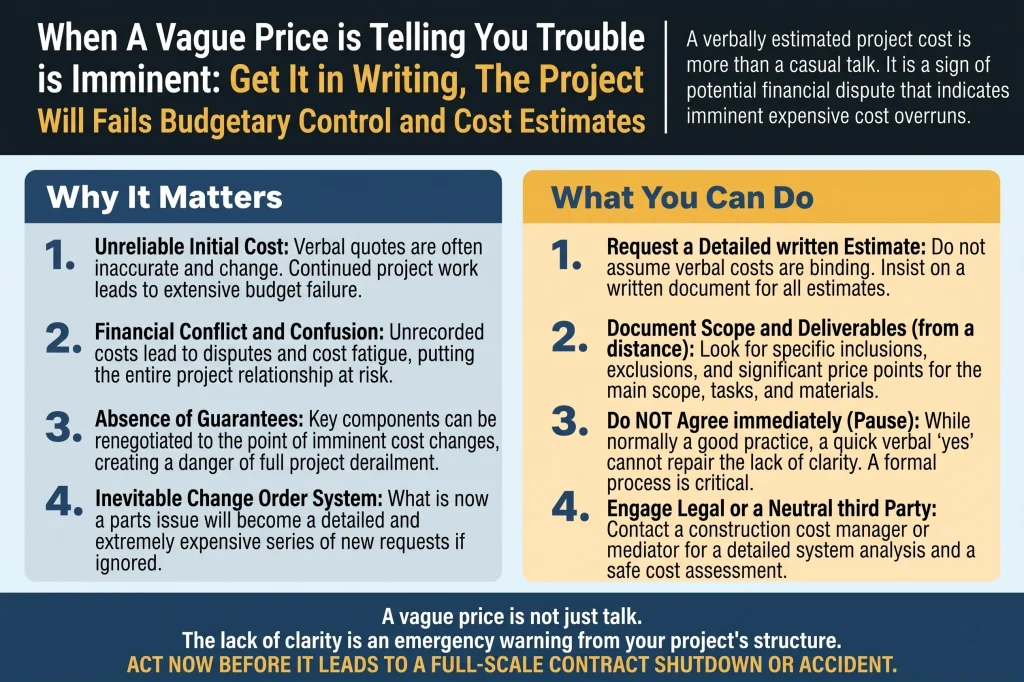
A bait-and-switch quote isn’t really about the dollar amount, it’s about what happens between the phone call and the driveway. The low number gets you to say yes to the visit. The jump counts on you feeling stuck once someone’s already there, tools out, expecting an answer. Every one of these five signs comes down to the same fix: get the price in writing, ask for the reason behind any change, and give yourself room to say no.
First Responder Garage Doors gives Southlake-area homeowners a written, itemized quote before any work starts, so the number you agree to is the number you pay. Contact us or give us a call if a quote from another company jumped in a way that didn’t add up.