
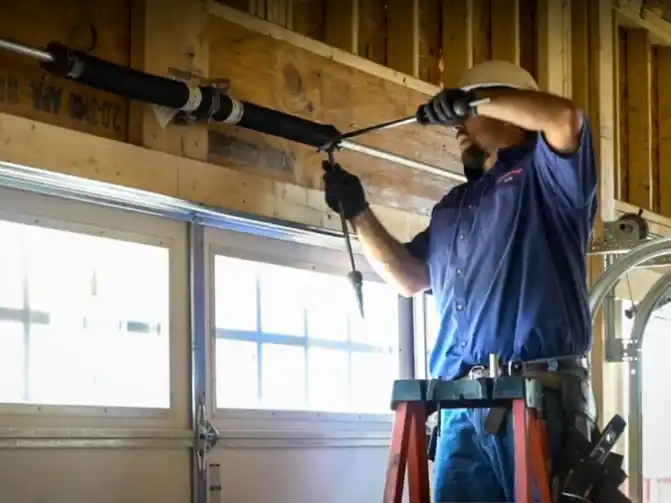
A garage door inspection is often the only way homeowners truly understand what their garage door is communicating before a serious mechanical failure occurs. Most garage doors do not fail suddenly; instead, they show subtle, progressive signs that something within the system is no longer functioning as intended. These signals matter because a garage door is a heavy, high-tension mechanical system that operates multiple times each day under significant stress.
When warning signs are ignored, minor mechanical imbalances often turn into costly repairs, safety hazards, or complete system failures that disrupt daily life. Understanding these early indicators helps homeowners recognize when routine garage door maintenance is no longer optional, but necessary. At times, these signs may mean you will need a garage door repair. Routine garage door maintenance is critical for identifying early warning signs before they escalate into costly or dangerous situations. Changes in sound, movement, response time, or alignment are not random inconveniences but deliberate signals from stressed components.
Why Garage Doors Communicate Problems Before Failure
Garage doors are engineered systems that operate smoothly only when all components are balanced and properly aligned. Springs, cables, rollers, tracks, hinges, and openers work together under tension so that any imbalance can cause noticeable performance changes. These changes appear as noise, hesitation, uneven movement, or increased strain during operation. A garage door inspection identifies how these symptoms connect to underlying mechanical stress. Ignoring these communications allows small problems to compound gradually until a failure becomes unavoidable.
Routine garage door maintenance is necessary because wear does not occur instantly; it develops incrementally over repeated use. Friction slowly increases, lubrication degrades, and metal components fatigue under constant load cycles. Each stage of wear produces subtle performance shifts that homeowners can detect with awareness. When these shifts are addressed early, adjustments and minor repairs restore balance without requiring major component replacement. Recognizing that your garage door is always communicating its condition is the foundation of preventive care.
Consider the advantages of scheduling a garage door tune-up before small issues turn into major problems by reading: Why Should You Schedule a Garage Door Tune-Up Before Problems Start?
How Mechanical Stress Reveals Itself Over Time
Mechanical stress within a garage door system rarely stays hidden indefinitely, because the system must move under load every time it operates. Springs begin to lose tension, rollers develop flat spots, and tracks slowly drift out of alignment due to vibration and environmental changes. These stresses alter how force travels through the system, causing homeowners to experience changes in sound or movement. A professional garage door inspection evaluates these stress patterns before they exceed safe operating limits. Early detection enables routine garage door maintenance to address issues before irreversible damage occurs.
Explore why garage door issues typically develop over time and are rarely without warning signs by reading: Why Garage Door Problems Rarely Happen Without Warning.
Unusual Noises as Early Warning Signs
Noise is often the first and most obvious sign that a garage door is developing problems, alerting attentive homeowners. Grinding, squeaking, scraping, or popping sounds are not harmless quirks, but signals that friction or tension has increased beyond normal levels. These sounds often originate from dry rollers, worn hinges, misaligned tracks, or fatigued springs that struggle to manage the load. A garage door inspection identifies the precise source of noise and determines whether lubrication, adjustment, or part replacement is necessary. Addressing noise early protects surrounding components from accelerated wear.
Routine garage door maintenance reduces noise by restoring smooth movement and minimizing metal-on-metal contact. Proper lubrication, alignment, and tension balancing eliminate unnecessary resistance during operation. When noise disappears after maintenance, it confirms that the system is operating within its intended mechanical range. Persistent noise, however, indicates deeper issues that should never be ignored. Sound changes are among the clearest signals your garage door gives before failure.
See how a simple tune-up helps keep minor garage door issues from disrupting your schedule and daily routine by reading: How a Simple Tune-Up Keeps Small Garage Door Issues From Stealing Your Time.
Why Ignoring Noise Leads to Larger Repairs
Ignoring unusual garage door noise allows friction and imbalance to continue damaging components during every operating cycle. What begins as a minor squeak from dry rollers can escalate into track damage or motor strain if left unaddressed. Springs under uneven tension may produce popping sounds before eventually breaking under stress. A thorough garage door inspection prevents these outcomes by addressing the root cause rather than masking symptoms. Routine garage door maintenance transforms noise from a warning into an opportunity for prevention.
Changes in Door Movement and Speed
Changes in how your garage door moves are another strong indicator that the mechanical balance within the system is shifting. A door that opens more slowly than usual, hesitates mid-cycle, or closes unevenly indicates increased resistance along its path. This resistance often stems from worn rollers, misaligned tracks, weakened springs, or strain on the opener. A garage door inspection assesses how these factors interact to affect movement. Smooth, consistent motion indicates proper balance and healthy operation.
Routine garage door maintenance restores proper movement by addressing resistance before it damages additional components. When a door resists opening, the opener compensates by applying more force, reducing its lifespan. Over time, this added strain can cause opener failure that would have been avoidable with early intervention. Observing changes in speed and smoothness allows homeowners to act before performance deteriorates further. Movement changes are among the most reliable predictors of future failure and injury if left unaddressed.
Find out how routine inspection and upkeep help reduce preventable injuries linked to home mechanical components by visiting PubMed Central.
Uneven or Jerky Motion as a Red Flag
Jerky movement or uneven lifting often indicates an imbalance between the left and right sides of the garage door system. This imbalance places excessive stress on cables, hinges, and door panels, increasing the risk of structural damage. A garage door inspection measures balance and alignment to identify whether springs or tracks require adjustment. Routine garage door maintenance restores symmetry, preventing uneven load distribution. Addressing this issue early preserves both performance and structural integrity.
Visual Clues That Indicate Internal Problems
Visual inspection of a garage door often reveals warning signs that complement performance-based signals. Frayed cables, rusted springs, bent tracks, loose hardware, or misaligned panels all indicate advancing wear. These visual clues show that mechanical stress has reached a point where structural integrity may be compromised. A professional garage door inspection evaluates these components for safety and reliability. Ignoring visible damage increases the likelihood of sudden failure.
Routine garage door maintenance addresses visual issues before they escalate into functional breakdowns. Rust weakens metal components, while loose hardware exacerbates alignment issues. Small adjustments or replacements restore stability without requiring extensive repairs. Visual changes often progress slowly, making them easy to overlook without deliberate attention. Regular inspection ensures these signs are addressed promptly.
Why Visual Damage Often Appears Late
Visual damage often appears after internal wear has already begun affecting performance. By the time cables fray or tracks bend, stress has usually been present for an extended period. This delay makes visual signs especially important, because they indicate advanced wear rather than early development. A garage door inspection helps determine whether damage is cosmetic or structural. Routine garage door maintenance prevents minor visual issues from becoming major safety concerns.
Get to know how regular upkeep and visual checks reduce the likelihood of garage door injuries by visiting StaySafe.org.
Increased Strain on the Garage Door Opener
The garage door opener often reveals underlying mechanical problems before the door itself fails completely. Delayed response times, inconsistent stopping points, or audible motor strain indicate that the opener is compensating for increased resistance. This resistance usually originates from the door system rather than the opener motor. A garage door inspection determines whether the issue lies with balance, alignment, or component wear. Protecting the opener depends on maintaining the door itself.
Routine garage door maintenance reduces strain on the opener by ensuring smooth, balanced movement. When the door operates correctly, the opener functions within its designed workload. Ignoring opener strain often results in premature motor failure, adding unnecessary expense. Observing how the opener behaves provides valuable insight into overall system health. Opener behavior is an indirect but reliable communication channel.
Inconsistent Opening and Closing Cycles
Unexpected reversals or incomplete closing cycles often indicate resistance or sensor interference caused by mechanical imbalance. While safety sensors are critical, frequent inconsistencies often indicate deeper system issues. A garage door inspection evaluates both sensors and mechanical components to determine the true cause. Routine garage door maintenance resolves resistance that triggers false safety responses. Consistent cycles indicate restored balance and reliability.
How Temperature and Weather Expose Weaknesses
Seasonal temperature changes often amplify existing garage door problems, making them more noticeable to homeowners. Cold weather thickens lubricants, increases metal contraction, and reduces spring flexibility, while heat causes expansion and alignment shifts. These changes do not create problems on their own, but expose weaknesses already present in the system. A garage door inspection before seasonal transitions identifies vulnerabilities early. Addressing them proactively improves year-round reliability.
Routine garage door maintenance accounts for environmental factors by adjusting tension, refreshing lubrication, and correcting alignment. These adjustments prevent seasonal stress from accelerating wear. Homeowners often notice increased noise or resistance during weather changes, which serves as a valuable warning sign. Responding promptly ensures environmental stress does not cause permanent damage. Seasonal awareness supports long-term system health.
Why Seasonal Inspections Reduce Breakdowns
Seasonal inspections reduce breakdowns by preparing the system for predictable environmental stress. Springs adjusted for temperature changes operate more efficiently under varying conditions. Lubrication suited to the climate prevents friction-related wear. A garage door inspection identifies adjustments needed for upcoming seasons. Routine garage door maintenance ensures smooth adaptation rather than reactive repairs.
When the Door Feels Heavier Than Usual
A garage door that feels heavier during manual operation is communicating loss of spring efficiency. Springs counterbalance door weight, and as they wear, the door becomes harder to lift. This change often develops gradually, making it easy to dismiss until lifting becomes noticeably difficult. A garage door inspection measures spring tension to confirm whether replacement is necessary. Addressing spring wear early prevents sudden failure.
Routine garage door maintenance prioritizes spring health because springs carry most of the system’s load. Operating a door with weakened springs places dangerous strain on cables, hinges, and the opener. Heavy doors also increase safety risks during manual operation. Recognizing weight changes early allows for controlled, safe replacement. Weight perception is one of the most important warning signals.
Safety Risks of Delayed Spring Replacement
Delayed spring replacement increases the risk of sudden breakage, which can release stored energy unpredictably. This risk endangers people, vehicles, and property near the garage door. A garage door inspection evaluates the condition of the springs before failure occurs. Routine garage door maintenance ensures springs are replaced under controlled conditions. Safety should always outweigh convenience when interpreting warning signs.
Why Routine Garage Door Maintenance Protects Long-Term Value
Routine garage door maintenance preserves both mechanical performance and property value by preventing visible and functional deterioration. A well-maintained garage door operates quietly, smoothly, and reliably, enhancing daily convenience. Neglected systems develop noise, misalignment, and visual wear that detract from the overall home appearance. A garage door inspection ensures issues are addressed before they affect resale perception. Maintenance reflects responsible homeownership.
Beyond appearance, maintenance protects major components from premature replacement. Balanced systems experience less stress, extending the lifespan of springs, rollers, tracks, and openers. This longevity reduces long-term ownership costs. Routine garage door maintenance prevents unexpected repairs and enables planned care. Long-term value benefits from consistent attention.
Building Confidence Through Preventive Care
Preventive care builds confidence by reducing uncertainty about system reliability and safety. Homeowners who understand warning signs feel empowered rather than reactive. A garage door inspection provides clarity on the system’s condition. Routine garage door maintenance reinforces predictable performance. Confidence grows when problems are addressed before emergencies occur.
Professional Garage Door Maintenance
Your garage door constantly communicates its condition through sound, movement, visual changes, and performance, long before a breakdown occurs. A professional garage door inspection translates these signals into actionable insights that protect safety, reliability, and long-term value. Routine garage door maintenance addresses small issues early, preventing them from escalating into costly or dangerous failures. By learning to recognize these warning signs, homeowners can respond proactively rather than reactively. Understanding what your garage door is telling you before it breaks transforms maintenance into a practical, confidence-building strategy rooted in prevention and awareness.
First Responder Garage Doors specializes in emergency garage door services designed to minimize downtime and restore safe operation. A rapid response approach ensures technicians arrive quickly to assess the issue. Clear, straightforward estimates help customers understand their options before work starts. Every service is delivered with professionalism and attention to detail.
Contact us today or give us a call for fast and reliable garage door solutions.
Frequently Asked Questions
A garage door often gives subtle signals before a major failure, such as unusual noises or changes in its movement. We find these early signs are easy to overlook during daily use. Paying attention early can prevent sudden breakdowns and safety risks.
Grinding, popping, or squeaking sounds usually indicate friction, wear, or imbalance developing within the system. We often see these noises appear as springs, rollers, or hinges begin to wear unevenly. Sound changes are one of the clearest early warnings.
When a garage door starts moving more slowly than usual, it often signals added resistance or strain. We find this can be caused by spring fatigue, poor lubrication, or track misalignment. Slower movement is a sign that the system is working harder than it should.
A door that suddenly feels heavier usually points to weakening or failing springs. Springs are responsible for counterbalancing most of the door’s weight. When they wear down, the door becomes harder and less safe to lift.
Uneven movement often means the door is out of balance or components are wearing at different rates. We see this when cables stretch unevenly or tracks shift slightly. Crooked movement increases stress and raises the risk of failure.
Unexpected stopping or reversing often signals resistance or imbalance detected by the system. We find that worn parts, track issues, or spring problems commonly cause this. These interruptions are early warnings, not random behavior.
Shaking or vibration usually indicates loose hardware, worn rollers, or misalignment. We often see these signs appear before parts loosen further or fail. Ignoring vibration can allow small issues to escalate quickly.
Seasonal temperature changes can affect metal components and door balance. We find that worn parts often exhibit more pronounced symptoms in cold or hot weather. Seasonal struggle usually reveals underlying wear that needs attention.
If the door requires frequent adjustments to function properly, it usually indicates a deeper issue. We see repeated adjustments used to mask wear rather than fix it. This pattern often appears shortly before component failure.
These signals give homeowners a chance to act before a complete breakdown occurs. We believe addressing warning signs early improves safety and prevents emergency repairs. A garage door often tells you it needs help long before it stops working.