

A manual garage door release lets you disconnect the door from the opener if the automatic system stops working. While this safety feature is essential during a power outage or opener failure, using it at the wrong time can cause the door to drop too quickly or create additional mechanical strain that may require garage door repair.
In Southlake, TX, homeowners rely on the smooth and safe operation of their residential garage doors for daily access and security. Understanding exactly when to use the garage door manual release helps prevent serious injury, protects the garage door system, and reduces the risk of unexpected damage that could lead to costly repairs.
What Is the Safe Way to Use the Garage Door Manual Release?
Using the garage door manual release safely requires confirming that the counterbalance system is stable and the springs are intact, because disengaging the opener while tension is compromised can cause the door to drop too quickly or shift weight suddenly.
Key safety conditions to verify before pulling the release cord include:
- Door fully closed and resting evenly at the bottom of the door opening
- Intact garage door springs supporting proper balance
- Opener carriage not jammed near the top of the garage door
- No visible cable slack, track bending, or hardware damage
- Balanced resistance when slightly lifting the door manually
- The emergency release mechanism is moving freely without obstruction
Because these stability indicators determine whether the door remains controlled after disengagement or drops due to spring failure, our guide on How to Use the Garage Door Manual Release Safely explains how professionals assess counterbalance tension before switching to manual mode.

Situations Where Using the Garage Door Manual Release Becomes Necessary
During a Power Outage
Loss of electrical power prevents the garage door opener from activating, making the garage door manual release necessary to regain access while the system remains disconnected from its automatic cycle.
Common conditions that signal manual disengagement include:
- Complete interruption of the power supply to the garage door motor
- No response from the wall control or remote transmitter
- Battery backup system not installed or nonfunctional
- The only entrance to the home is located inside the garage
- The opener motor is silent despite pressing the control button
Clopay explains how to manually open a garage door during a power outage and outlines why controlled disengagement protects the door’s balance and overall safety.
When the Opener Motor Malfunctions
Mechanical or electrical failure inside the door opener can prevent normal cycling, requiring the garage door manual release to shift the system into manual mode for repositioning.
Indicators of motor malfunction may include:
- A loud click from the opener carriage without movement
- Grinding or humming from the garage door motor
- Door remaining stuck at the top of the garage door
- Wall control lights are functioning, but no lift action
- Intermittent operation across multiple attempts
Opener drive failures and carriage issues can block normal movement even with power available, which is why switching to manual mode may be necessary to restore controlled access.
If the Door Is Stuck in the Open Position
A garage door stuck in the open position exposes the property to security risks and weather intrusion, making disengagement necessary if the automatic system cannot complete the closing cycle.
Situations that often require manual intervention include:
- Door halting mid-cycle without obstruction
- Safety sensors showing no visible blockage
- Opener carriage stops before full downward travel
- Garage door lock not engaging properly
- Partial closing followed by immediate reversal
Securing the door safely after disengagement restores control and reduces exposure while further mechanical evaluation is scheduled.
After a Garage Door Drops Suddenly
A garage door can drop suddenly when spring support is lost or lift hardware shifts under load, making controlled manual assessment important to confirm counterbalance integrity before further movement.
Warning signs leading up to a sudden drop often include:
- Noticeable gap in torsion spring coils
- Slack lift cables near drum assemblies
- Door feeling heavier during previous cycles
- Jerky travel before the complete drop
- Visible strain near the bottom of the door
Clopay explains how torsion and extension springs counterbalance the door’s weight and notes that spring failure can accelerate descent, reinforcing why careful disengagement matters after a sudden drop.
When Conducting Professional System Inspections
Technicians disengage the garage door’s manual release to isolate the garage door system from the automatic door opener and evaluate the door’s true balance without motor assistance.
Inspection procedures typically involve:
- Disconnecting the opener carriage to test free movement
- Lifting the door halfway to assess balance
- Checking cable tension on both sides
- Observing smooth operation along tracks
- Confirming proper engagement of the emergency release mechanism
Independent balance testing enables accurate diagnosis of garage door problems and prevents unnecessary repairs caused by misinterpreted motor signals.
When You Should NOT Pull the Garage Door Manual Release
Using the garage door manual release at the wrong time can trigger an uncontrolled drop or worsen existing garage door problems, especially if balance, cable tension, or spring support is already compromised.
Avoid pulling the manual release in these situations:
- Door stuck in a partially open position or sitting unevenly in the tracks
- Garage door springs are visibly broken, stretched, or separated
- Lift cables appear slack, frayed, or off the drum
- Door feeling unusually heavy or is unable to hold a mid-level position
- Tracks, rollers, or hinges showing structural misalignment
- Emergency release cord or release mechanism binding during movement
These conditions often signal counterbalance failure or structural instability, and disengaging the system under tension can increase the risk of sudden descent and additional damage.
How the Emergency Garage Door Release Works Within the Counterbalance System
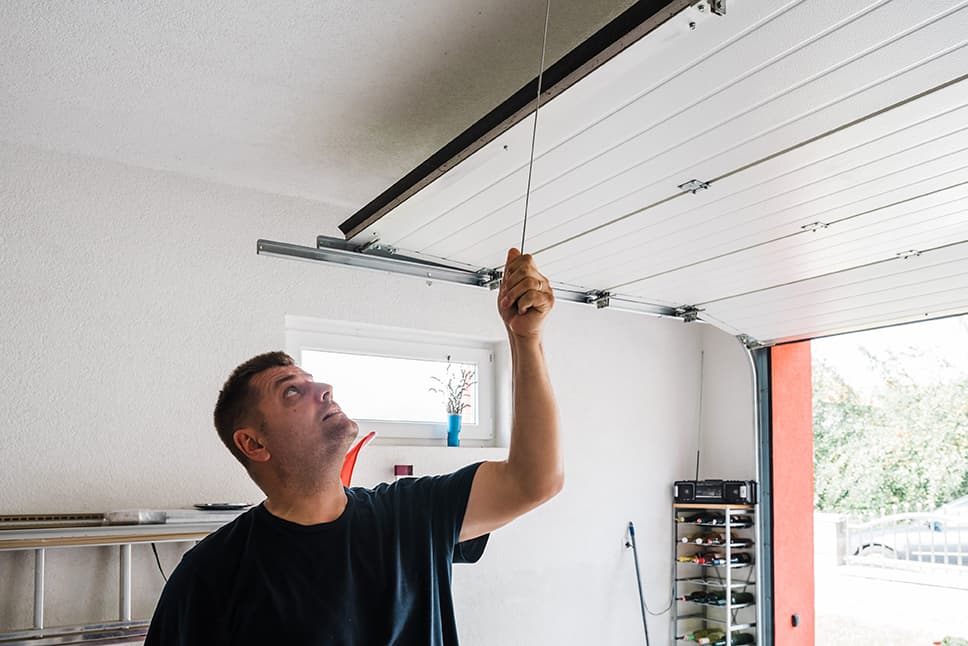
The emergency garage door release function depends on the counterbalance system carrying the door weight, so disengaging the opener simply separates the drive from the door without removing the spring load.
Key parts and actions involved include:
- Emergency release cord pulling a lever that disconnects the opener carriage from the trolley
- The red cord and emergency cord shift the system from the connected position to manual mode
- Garage door springs counterbalancing weight so the door can move with manual operation
- Release mechanism allowing the door to travel independently of the garage door motor
- Re-engagement requires alignment so the garage door opener carriage reconnects for smooth operation
The release function depends on balanced springs and smooth travel along the track, and a garage door tune-up confirms that the system stays stable before the release is needed again.
What Mechanical Failures Make Manual Disengagement Risky?
Manual disengagement becomes risky when key lift parts cannot support the door weight, as a weakened counterbalance setup can cause a sudden drop and unsafe movement.
High-risk mechanical failures include:
- Broken or fatigued garage door springs reduce lift support
- Slack or frayed lift cables slipping off drums
- Bent tracks or damaged rollers create binding and uneven travel
- Misaligned opener carriage or worn drive parts are increasing resistance
- Loose hardware near the top of the garage door is shifting the alignment
Spring and lift-part failures can remove counterbalance support, so manual disengagement can become unsafe quickly, and replacing the broken spring restores stable lift control when tension is compromised.
What Happens If the Door Feels Too Heavy After Release?
A door that feels too heavy after release usually signals lost spring support, so manual mode may expose uncontrolled weight and increase safety risk.
Common outcomes and warning signs include:
- Door dropping quickly instead of staying in place
- Extreme resistance during manual operation
- Uneven travel that pulls the door out of alignment
- Loud click or strain near the opener carriage area
- Increased need for garage door repair due to added stress on the garage door system
A heavy manual lift usually indicates loss of spring support, and replacing the broken spring restores counterbalance, so the door weight is controlled again.
Why Isn’t My Garage Door Manual Release Working?
A garage door manual release may fail to disengage when the release system is binding, misaligned, or stuck under tension, which can keep the door opener connected even after pulling the cord.
Common reasons the manual release does not work include:
- Release the cord pulling, but the opener carriage stays locked in place
- Emergency release mechanism binding due to rust, debris, or wear
- The door is sitting under load because the balance is off, or the springs are weakened
- Trolley assembly misalignment is preventing proper disconnect
- The emergency release lock engages and blocks normal release movement
Release failures often trace back to carriage alignment and tension-related binding, and our blog on Why Isn’t My Garage Door Manual Release Working? breaks down the most common causes and the first things professionals check.
What to Do If the Garage Door Manual Release Is Stuck
A stuck garage door manual release usually indicates the release mechanism is binding under load, due to corrosion or misalignment, which can prevent the system from shifting cleanly into manual mode.
Common reasons the manual release gets stuck include:
- The emergency release cord is feeling tight with little movement
- The opener’s carriage jammed along the rail or trolley path
- The emergency release lock kit engages and holds the release system in place
- Door tension is pulling against the release mechanism due to a spring imbalance
- Red rope or emergency cord snagging on nearby hardware
Sticking problems often come from load pressure and carriage positioning, and our guide on What to Do If the Garage Door Manual Release Is Stuck explains the most likely causes and the service checks that restore safe function.
Professional Evaluation After Using the Garage Door Manual Release
A professional evaluation is required after using the garage door manual release because hidden balance or hardware issues can leave the door unstable, even if it appears to operate normally.
Key checks typically include:
- Balance testing to confirm the garage door springs are carrying the weight correctly
- Cable and drum inspection for slack, fraying, or uneven load
- Track and roller alignment review for smooth operation
- Opener carriage reconnection check for proper connected position engagement
- Safety feature verification, including the emergency release mechanism and garage door lock function
A thorough inspection restores reliable performance and reduces the chance of repeat sudden drops, sticking, or unexpected failure.
Know When to Use the Manual Release and Keep Your Door Safe in Southlake, TX
Knowing when to use the garage door manual release helps protect your garage door system and reduces the risk of serious injury if the door becomes unbalanced or drops too quickly during operation. Proper timing also helps maintain smooth operation, supports energy efficiency, and limits avoidable strain that can lead to garage door repair.
First Responder Garage Doors serves Southlake, TX with responsive garage door service and emergency services that restore safe, reliable performance for residential garage doors. If the manual release feels risky, the release mechanism binds, or the door movement becomes sudden or unstable, contact us or give us a call today for prompt support and an accurate service plan.