
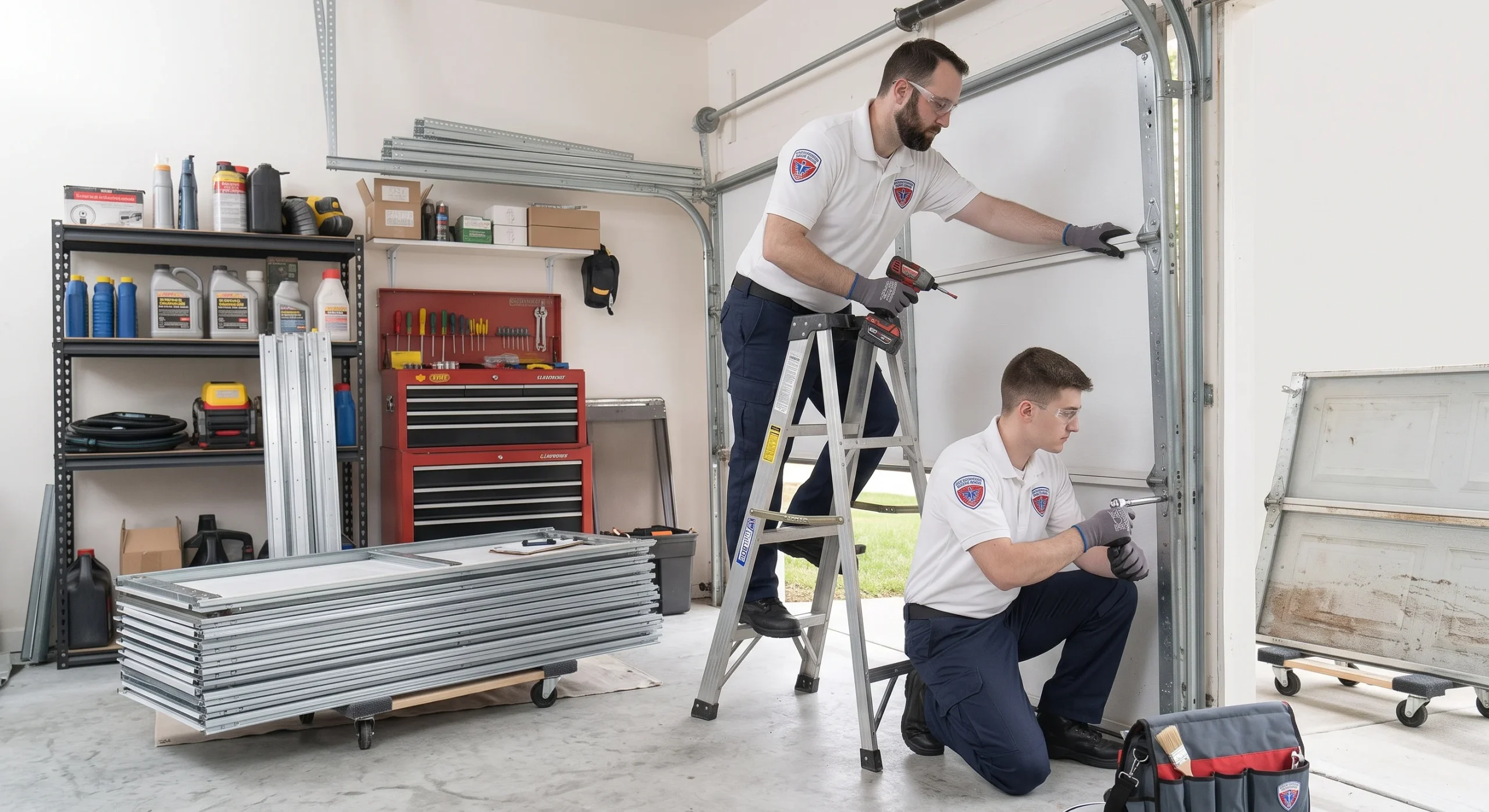
Garage door panel damage often appears straightforward on the surface, leading to the impression that replacement is low-risk and straightforward. In reality, panels serve structural, mechanical, and insulating roles that directly influence how the entire door system operates under daily conditions, making a garage door tune-up an important step to verify alignment, balance, and performance after any panel work.
When garage door panel replacement is performed without professional oversight, hidden risks can gradually emerge due to imbalance, misalignment, or safety system disruption. Certified professionals approach panel replacement with system-level awareness, reducing the likelihood that short-term fixes introduce long-term reliability concerns.
Preventing Structural Imbalance Across the Door System
Panel replacement affects how weight is distributed across the door, which directly influences balance, movement consistency, and component wear. Improper replacement often introduces a subtle imbalance that worsens over time.
Certified professionals evaluate structural relationships before and after replacement to preserve coordinated movement.
Find out when garage door panel replacement makes more sense than investing in a full door upgrade by reading: When Does Garage Door Panel Replacement Make More Sense Than a Full Door Upgrade?
Structural Balance Risks Avoided Through Professional Replacement
- Uneven weight distribution across door sections
- Inconsistent panel alignment during opening cycles
- Excessive strain is placed on springs and cables
- Accelerated wear on rollers and hinges
- Door binding caused by the shifted center of gravity
- Increased vibration throughout the track system
Structural imbalance rarely causes immediate failure, yet it steadily degrades performance through repeated cycles. Certified professionals account for panel weight, construction, and insulation to ensure replacement panels integrate without disrupting equilibrium.
Maintaining balance protects system longevity while preserving smooth, predictable movement that untrained replacement efforts often compromise.
Learn which types of dents, cracks, and localized damage can be effectively addressed through garage door panel replacement by reading: What Types of Damage Can Be Solved With Garage Door Panel Replacement?
Avoiding Safety System Interference and Detection Errors
Garage door safety systems rely on consistent movement, alignment, and force behavior to function correctly. Panel replacement performed without calibration can interfere with sensor response and safety thresholds.
Certified professionals test safety performance as part of the replacement process rather than assuming compatibility.
Explore how long a garage door panel replacement typically takes, from inspection and matching to installation and final testing by reading: How Long Does a Garage Door Panel Replacement Take From Start to Finish?
Safety Risks Prevented Through Certified Panel Replacement
- Delayed reversal during obstruction detection
- Inconsistent sensor response caused by misalignment
- Excessive closing force was introduced after the replacement
- Reduced sensitivity to low-profile obstacles
- Incomplete safety system testing after installation
- Reliance on mechanical resistance instead of detection
Improper panel replacement can subtly alter door behavior, leading to inconsistent responses from safety systems. Certified professionals verify sensor alignment, force settings, and reversal timing to ensure safety features remain reliable.
Preventing safety interference protects users and property while preserving compliance with expected safety performance standards.
Reducing Premature Wear on Mechanical Components
Panel replacement affects how force transfers across mechanical components, including springs, cables, rollers, and tracks. Improper garage door installation increases stress that shortens component lifespan.
Certified professionals minimize mechanical strain through precision alignment and balancing.
Mechanical Wear Risks Avoided Through Professional Work
- Increased tension is placed on springs beyond design limits
- Cable fraying caused by uneven load distribution
- Roller wear is accelerated by misaligned panels
- Track deformation from inconsistent movement
- Opener strain caused by excessive resistance
- Fastener loosening due to vibration
Mechanical components tolerate limited deviation, yet repeated stress accelerates wear significantly. Certified professionals evaluate movement patterns after replacement to confirm smooth, balanced operation.
Preventing premature wear reduces unexpected failures and preserves overall system reliability.
Avoiding Insulation and Efficiency Loss
Garage door panels directly affect insulation performance, influencing temperature stability and energy efficiency. Improper panel replacement often introduces gaps or mismatched insulation.
Certified professionals ensure insulation continuity across all panels.
Efficiency Risks Prevented Through Certified Replacement
- Insulation mismatches between old and new panels
- Air gaps created by improper panel seating
- Condensation caused by thermal inconsistency
- Increased energy transfer through compromised panels
- Moisture intrusion due to sealing errors
- Noise infiltration caused by insulation gaps
Efficiency losses may not appear immediately, yet they influence comfort and energy use over time. Certified professionals verify insulation compatibility and sealing integrity to preserve environmental performance.
Maintaining consistent insulation prevents a gradual efficiency decline that often follows untrained replacement work.
Preventing Alignment and Track Compatibility Issues
Panel replacement affects how the door interacts with tracks throughout its travel range. Misalignment introduced during replacement often worsens progressively.
Certified professionals adjust and verify alignment across the full system.
Alignment Risks Avoided Through Professional Panel Installation
- Track binding caused by panel offset
- Uneven spacing between panels during movement
- Increased friction at hinge and roller points
- Panel edges contacting track walls
- Progressive misalignment after repeated cycles
- Difficulty maintaining adjustments over time
Alignment issues rarely resolve on their own and often spread stress across components. Certified professionals confirm track spacing, panel orientation, and roller engagement before finalizing installation.
Preserving alignment ensures predictable operation and reduces long-term service needs.
Avoiding Compatibility Issues With Existing Door Sections
Garage door replacement panels must match existing sections in material, thickness, weight, and design. Incompatibility creates performance inconsistencies.
Certified professionals verify compatibility before installation.
Compatibility Risks Prevented Through Certified Evaluation
- Weight differences alter balance characteristics
- Material mismatches affecting expansion behavior
- Inconsistent panel thickness is disrupting alignment
- Finish differences affecting structural rigidity
- Hardware incompatibility is causing attachment issues
- Insulation density mismatches affecting performance
Compatibility issues often appear minor initially, yet they influence how the door responds to temperature changes and repeated movement. The Code of Federal Regulations for Garage Doors guides certified professionals in sourcing panels that meet original specifications or in recommending compliant alternatives when exact matching proves unreliable.
Ensuring compatibility preserves consistent system behavior.
Reducing the Risk of Repeated Adjustments and Service Calls
Improper panel replacement often leads to recurring adjustments as issues surface gradually. Certified replacement minimizes the need for ongoing correction.
Professionals focus on system stability rather than temporary fixes.
Recurring Service Risks Avoided Through Professional Replacement
- Frequent balance readjustments
- Repeated sensor recalibration
- Ongoing noise and vibration complaints
- Intermittent operational failures
- Progressive hardware loosening
- Escalating maintenance requirements
Repeated service needs often signal that a replacement introduced underlying instability. Certified professionals validate performance through testing rather than assuming success after installation.
Reducing repeat service protects reliability and lowers cumulative disruption.
Preventing Cosmetic and Visual Inconsistencies
Panel replacement affects curb appeal and performance. Improper matching creates noticeable visual inconsistencies.
Certified professionals manage aesthetic alignment carefully.
Visual Risks Avoided Through Certified Panel Replacement
- Color mismatches caused by improper sourcing
- Texture differences that highlight repairs
- Panel spacing inconsistencies are visible when closed
- Finish durability issues over time
- Uneven aging between panels
- Reduced property appearance value
Visual inconsistency often draws attention to repairs rather than restoring appearance. Certified professionals consider finish compatibility, aging patterns, and alignment to preserve visual continuity.
Maintaining appearance supports both satisfaction and property presentation.
Protecting Warranty and Manufacturer Support
Improper replacement can void warranties or limit manufacturer support options. Certified professionals preserve coverage by following approved procedures.
Professional work protects future service options.
Warranty Risks Avoided Through Certified Installation
- Voided panel or door warranties
- Ineligibility for manufacturer support
- Documentation gaps affecting coverage
- Improper installation affecting claims
- Loss of material guarantees
- Reduced access to authorized service
Warranty protection supports long-term reliability by preserving access to replacement parts and technical support. Certified professionals document work appropriately to maintain coverage.
Protecting warranties reduces risk exposure over the system’s lifespan.
Supporting Long-Term System Reliability Through Professional Oversight
Garage door panel replacement affects structural balance, safety performance, mechanical wear, and efficiency in interconnected ways. Certified professionals approach replacement with a system-level understanding rather than an isolated repair focus.
Professional oversight ensures that the replacement restores stability rather than introduces hidden risks. Thoughtful evaluation, precise installation, and comprehensive testing preserve reliable operation while minimizing unexpected issues.
Viewing panel replacement as a coordinated system task rather than a simple component swap supports dependable performance well into the future.
First Responder Garage Doors specializes in comprehensive garage door solutions, including repairs, installations, and support for new construction. A commitment to fast response times ensures customers receive help when it matters most. Same-day service provides quick, effective solutions for urgent garage door issues.
Contact us today or give us a call for prompt and reliable garage door service.
Frequently Asked Questions
Garage door panels are part of a system under significant tension and weight. We often see injuries occur when panels are removed without properly managing springs, cables, or door balance. Certified professionals follow controlled procedures that reduce the risk of sudden movement or collapse. This keeps people, vehicles, and property safe during the repair.
Replacing a panel changes the door’s weight distribution. We frequently see imbalance issues arise when panels are installed without recalibrating springs and cables. Certified professionals adjust the system to restore proper balance. This prevents strain that could lead to premature component failure.
Panels must align precisely with tracks and rollers to move smoothly. We often find that incorrect installation causes binding or uneven movement. Certified professionals ensure panels are correctly positioned and secured. This reduces the risk of the door coming off track later.
An opener is designed to guide a properly balanced door, not compensate for added resistance. We frequently see opener motors overworked after improper panel replacement. Certified professionals verify that the door moves freely before reconnecting the opener, establishing a foundation for proper care and maintenance, and protecting the opener from unnecessary strain.
Panels contribute to the door’s overall rigidity and strength. We often see doors flex or twist when panels are installed incorrectly. Certified professionals ensure panels reinforce the door rather than weaken it. This maintains long-term structural stability.
Improper installation often creates new problems instead of solving the original one. We frequently see repeat service calls after shortcut repairs. Certified professionals address alignment, hardware, and balance during replacement. This reduces the likelihood of ongoing issues.
Hidden stress can spread to springs, cables, rollers, and tracks due to improper panel installation. We often find this damage developing quietly over time. Certified professionals inspect surrounding components during replacement. This helps prevent secondary damage from going unnoticed.
Panels must match the door’s original size, weight, and design. We frequently see problems when mismatched panels alter system dynamics. Certified professionals ensure correct specifications are used. Proper matching supports safe and predictable operation.
Improper repairs can create safety hazards for household members and visitors. We often see liability risks increase when doors malfunction unexpectedly. Certified professionals complete work to established safety standards. This reduces homeowner exposure to avoidable accidents.
Certified professionals focus on system-wide performance, not just appearance. We frequently see better long-term results when replacement is done with proper calibration and testing. Reliable operation reduces future safety and maintenance concerns. This approach protects both the door and the homeowner’s investment.